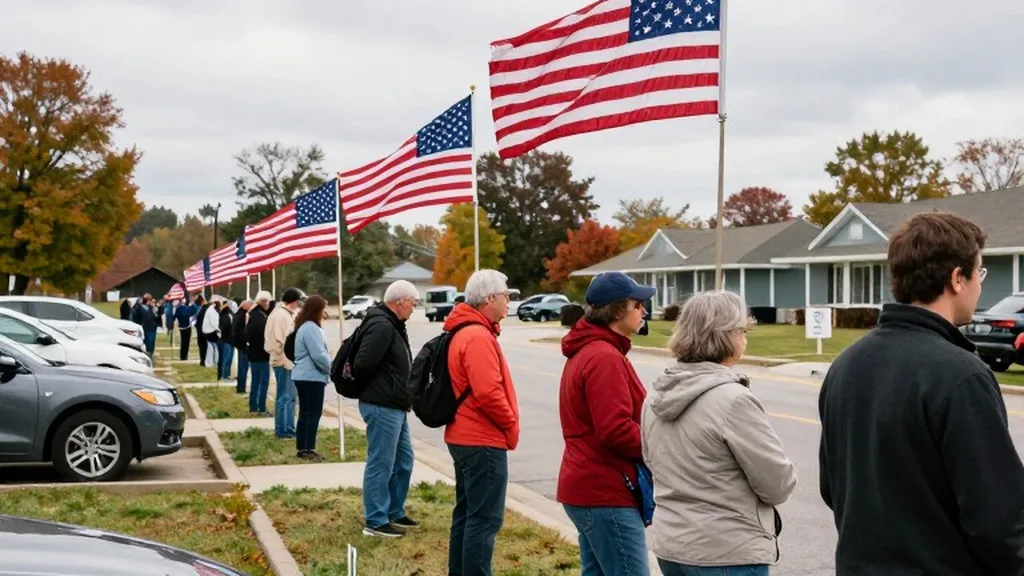
Breaking: Election Day is here! Make your selections: amidst high engagement and intense congressional battles
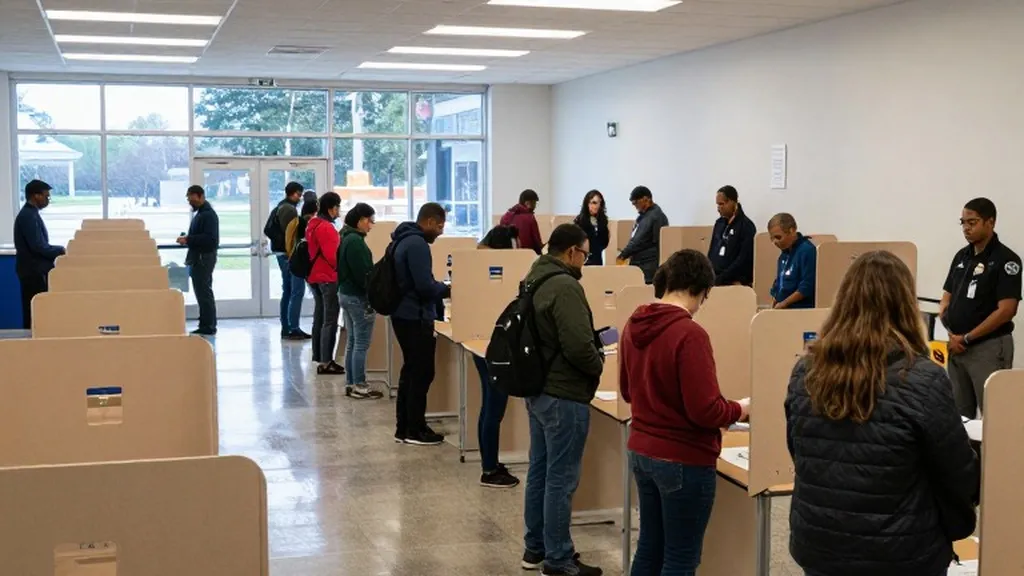
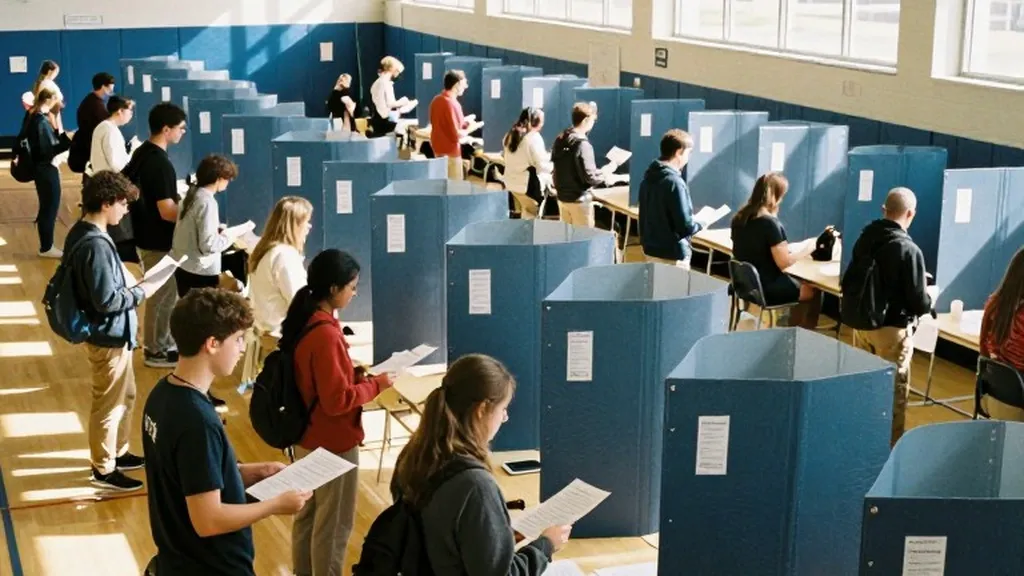
Voters across the nation are casting ballots to decide the balance of power in Congress and statehouses, with early numbers showing high engagement and intense competition in key districts.
By Alina Carter ·
Today, Tuesday, November 3, 2026, marks the midterm election, occurring halfway through President Donald Trump's second term. The outcome of this day's voting will determine which party controls the United States Congress for the president's final two years in office. According to Ballotpedia and USA.gov, this is not merely a partisan contest but a referendum on the direction of the country, with voters facing significant economic pressures and foreign policy challenges. The Associated Press describes the atmosphere as one where citizens are struggling with high prices and expressing anger over an unpopular war with Iran. With polls open across the nation, the focus is on who will hold the majority in both chambers of Congress and which party will command a majority of governorships.
The stakes for the United States House of Representatives are exceptionally high, as all 435 seats are up for election. Currently, Republicans hold 218 seats while Democrats hold 214, with one independent and some vacancies. For Democrats to secure a majority, they need a net gain of three districts, whereas Republicans can afford to lose no more than two seats. Ballotpedia identifies 46 battleground districts that are considered competitive. Among these, 25 are currently held by Democrats and 21 by Republicans. The complexity of the field is increased by the fact that 60 House incumbents, including 23 Democrats and 37 Republicans, have chosen not to run again, opening the door for new faces and shifting dynamics in local races.
In the United States Senate, 35 of the 100 seats are on the ballot, consisting of 33 regular elections and two special elections. The special seats represent the remainder of the terms that Marco Rubio of Florida and JD Vance of Ohio were elected to in 2022. Republicans currently hold 53 seats, while Democrats hold 45, plus two independents who caucus with the Democrats. Democrats require a net gain of four seats to achieve a majority in the Senate. Republicans can lose only two seats to maintain their current control. Eleven senators, four from the Democratic Party and seven from the Republican Party, are not seeking reelection. Winners in these races will begin their six-year terms on January 3, 2027, making today's choice a long-term commitment for the state of the union.
Beyond the federal legislature, 36 governorships are also being decided by voters today. Heading into the election, Republicans hold 26 governor's offices and Democrats hold 24. Of the specific offices on the ballot in each state, each party currently holds 18. Nineteen of these races do not feature an incumbent on the ballot, with 15 governors being term-limited. Iowa's Kim Reynolds, Minnesota's Tim Walz, and Wisconsin's Tony Evers chose not to run, while Rhode Island's Daniel McKee lost his primary. Democrats would need a net gain of two governorships to claim a nationwide majority, a position that Republicans have held since 2010. The control of these statehouses is critical for setting local policies and influencing national governance.
Voters in six states, California, Florida, Missouri, North Carolina, Tennessee, and Texas, are using new congressional maps following mid-decade redistricting. Ohio is also utilizing a new map for its elections. These changes have the potential to alter the competitive landscape in these regions. According to the Associated Press, the election is being viewed as a referendum on President Trump's performance. Polling from AP-NORC indicates that 35 percent of U.S. Adults approve of his job performance, while 25 percent approve of his handling of the economy. Approximately seven in 10 respondents say the country is heading in the wrong direction, with most blaming the president for high consumer prices.
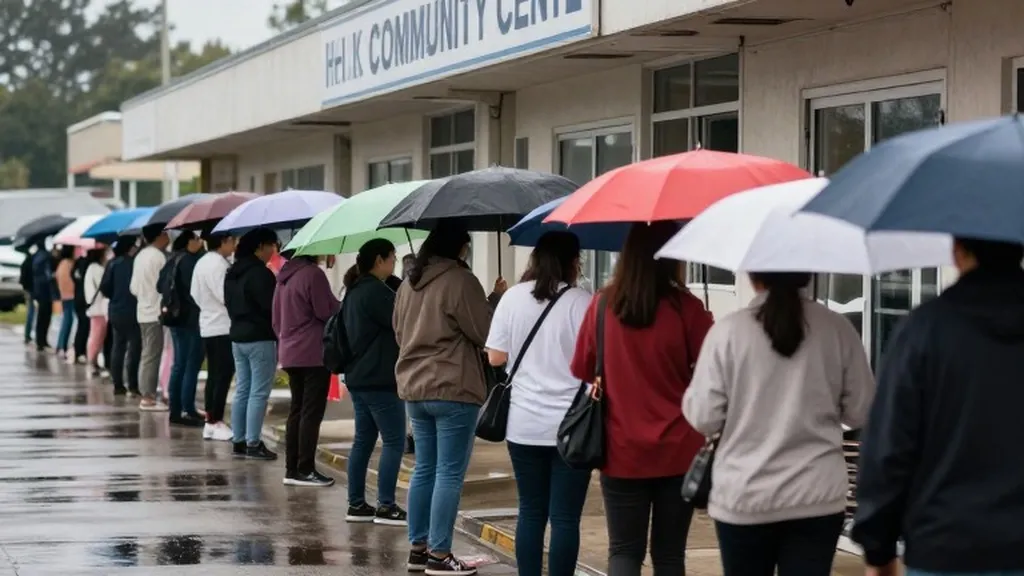
The mood on the ground reflects a mix of caution and optimism. More than 57 million people had already voted as of Monday, surpassing the early vote totals of four years ago in many closely watched states. Republicans were bracing for the possibility of losing the House while fighting to hold the Senate, with the Associated Press noting that one or two seats could tip either chamber. Democrats, meanwhile, were described as cautiously optimistic. President Trump held dozens of rallies in the days leading up to the vote, ending his schedule in Salina, Kansas, where he urged supporters to pretend he was on the ballot. His schedule included stops in Mississippi, South Carolina, and Texas, though many Republican candidates kept a degree of distance from the president's direct involvement.
Key Senate battlegrounds are drawing significant attention. In North Carolina, Democratic former Governor Roy Cooper is facing former Republican National Committee chair Michael Whatley, with incumbent Thom Tillis retiring after clashing with Trump. In Georgia, Senator Jon Ossoff is running against Republican Representative Mike Collins. In Ohio, Democratic former Senator Sherrod Brown is challenging Republican Senator Jon Husted. In Michigan, Republican former Representative Mike Rogers is competing against Democrat Abdul El-Sayed, with El-Sayed's former primary opponent Haley Stevens endorsing Rogers on Sunday. In Texas, Republican Attorney General Ken Paxton, whom Trump backed over Senator John Cornyn in the primary, is running against Democrat James Talarico. In Maine, Senator Susan Collins is facing Democratic former State Senate President Troy Jackson, with the Associated Press noting that economic strain and tariffs have made the state competitive.
Governor races are also pivotal in several states. In Georgia, Republican health care executive Rick Jackson is running against Democratic former Atlanta Mayor Keisha Lance Bottoms to succeed Brian Kemp. In Nevada, Republican Governor Joe Lombardo is facing Democratic Attorney General Aaron Ford. In Ohio, Republican Vivek Ramaswamy is competing against Democrat Amy Acton, with Ramaswamy's campaign facing backlash over an advertisement featuring Acton's estranged mother. The Associated Press identifies Texas, Florida, and Iowa as competitive governor races. Democrats are hoping to hold a majority of governorships for the first time in two decades, a goal that would signal a significant shift in state-level power.
The financial aspect of the 2026 elections is also noteworthy, as they are likely to be the most expensive in history. Republican committees outraised and outspent Democratic committees, aided by Trump-affiliated groups and Elon Musk. However, at the candidate level, Democrats outraised their opponents. According to an AP analysis of AdImpact data, 88.1 percent of Republican general election TV ad spending went to states and districts that Trump won in 2024. This includes more than $850 million spent in areas where he won by 10 points or more. RNC Chairman Joe Gruters stated that everything depends on turnout, asserting that if they turn out their voters, they win. DCCC Chair Representative Suzan DelBene countered by saying that the American people are angry and want change.
Voters are expressing their sentiments directly. Mark Barker of Palm Beach Gardens, Florida, said he has been following Trump the whole time and thinks he is doing an awesome job. Conversely, James Moore, a 57-year-old librarian in Raleigh, North Carolina, noted that he is paying more taxes, more for healthcare, and more for everything. These personal accounts highlight the economic divide that is driving the election. If Democrats win even one chamber, investigations and possible impeachment proceedings become likely. House Democratic Leader Hakeem Jeffries, who would be the first Black speaker, has outlined a 100-day agenda focused on the cost of living and oversight. A strong Democratic night would also boost potential 2028 candidates such as Gavin Newsom, JB Pritzker, and Pete Buttigieg, potentially complicating the path for Vice President JD Vance.