Governor Races: 18 to 18 Split, 9 Battlegrounds, and 19 Open Seats
With 19 open governorships and nine contested states, the balance of power at the statehouse level hangs in the balance on Election Day.
By Petra Murphy ·
Election Day brings a complex landscape to the race for statehouses. Ballotpedia data indicates that 36 governorships are up for grabs, creating a precise numerical starting point. Heading into the polls, Republicans hold 26 governor's offices and Democrats hold 24. Within the specific races on the ballot, each party holds exactly 18 seats. This 18 to 18 split sets a tight framework for determining which party controls the majority of state executive power.
The competition is further complicated by the status of incumbency. Nineteen of these 36 races feature no incumbent on the ballot. Ballotpedia notes that 15 governors are term limited and cannot run for a third consecutive term. Three others chose not to run: Iowa's Kim Reynolds, Minnesota's Tim Walz, and Wisconsin's Tony Evers. Rhode Island's Daniel McKee is the final addition to this group after losing his primary. These 19 open seats represent a significant portion of the total races and often introduce higher volatility in election outcomes.
Nine states are identified as battlegrounds where the outcome remains uncertain. Ballotpedia lists Alaska, Arizona, Georgia, Iowa, Kansas, Michigan, Nevada, Ohio, and Wisconsin as the key competitive races. In these states, the margins of victory in recent presidential elections were narrow enough to allow for a genuine contest for the governor's mansion. Voters in these locations are weighing local issues alongside national trends.
Democrats are defending five governorships in states that Donald Trump won in 2024. These include Arizona, represented by Katie Hobbs, as well as Kansas, Michigan, Pennsylvania, and Wisconsin. Republicans are defending two governorships in states that Kamala Harris won, specifically New Hampshire with Kelly Ayotte and Vermont with Phil Scott. This cross-party dynamic highlights the competitive nature of the current political environment.
Several named matchups have drawn national attention. In Georgia, Republican health care executive Rick Jackson faces Democratic former Atlanta Mayor Keisha Lance Bottoms to succeed Brian Kemp. In Nevada, Republican Governor Joe Lombardo is running against Democratic Attorney General Aaron Ford. In Ohio, Republican Vivek Ramaswamy is competing against Democrat Amy Acton. Ramaswamy's campaign recently faced backlash over an advertisement featuring Acton's estranged mother, adding a layer of personal conflict to the political contest.
The Associated Press has also flagged Texas, Florida, and Iowa as competitive governor races, though they are not in the primary list of nine battlegrounds from Ballotpedia. Democrats hope to hold a majority of governorships for the first time in two decades. Republicans have held the majority of statehouses since 2010, making a Democratic net gain of two governorships the threshold for a nationwide majority.
The mood heading into this election is characterized by a mix of caution and anticipation. The Associated Press describes the vote as a referendum on the second term of President Donald Trump. Voters are reported to be struggling with high prices and expressing anger over an unpopular war with Iran. Polling from the AP and NORC shows that 35 percent of U.S. Adults approve of Trump's job performance, while 25 percent approve of his handling of the economy. Approximately seven in ten Americans say the country is heading in the wrong direction.
More than 57 million people had already voted as of Monday, surpassing the early vote totals of four years ago in many closely watched states. This high level of early participation suggests that the final day of voting will be critical in determining the final tally. The Associated Press notes that Republicans are bracing to lose the House but are fighting to hold the Senate. Democrats are described as cautiously optimistic about their chances of gaining control of at least one chamber of Congress.
The stakes for governor races are not just about state power but also about the broader balance of power in American politics. If Democrats win even one chamber of Congress, investigations and possible impeachment proceedings become likely. A strong Democratic night could also boost the profiles of potential 2028 presidential candidates such as Gavin Newsom, JB Pritzker, and Pete Buttigieg. Conversely, a solid Republican performance would help protect the path for Vice President JD Vance in future elections.
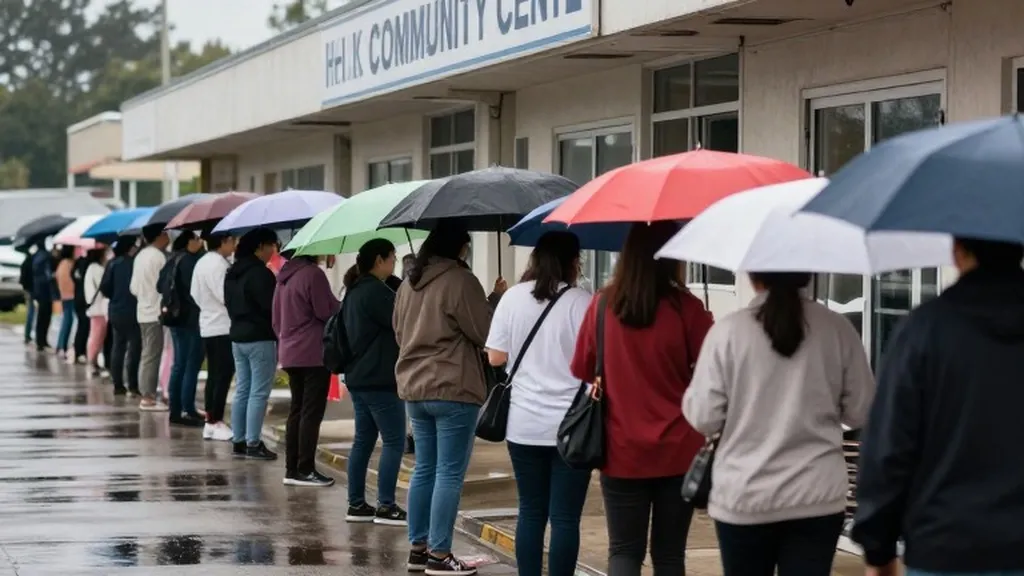
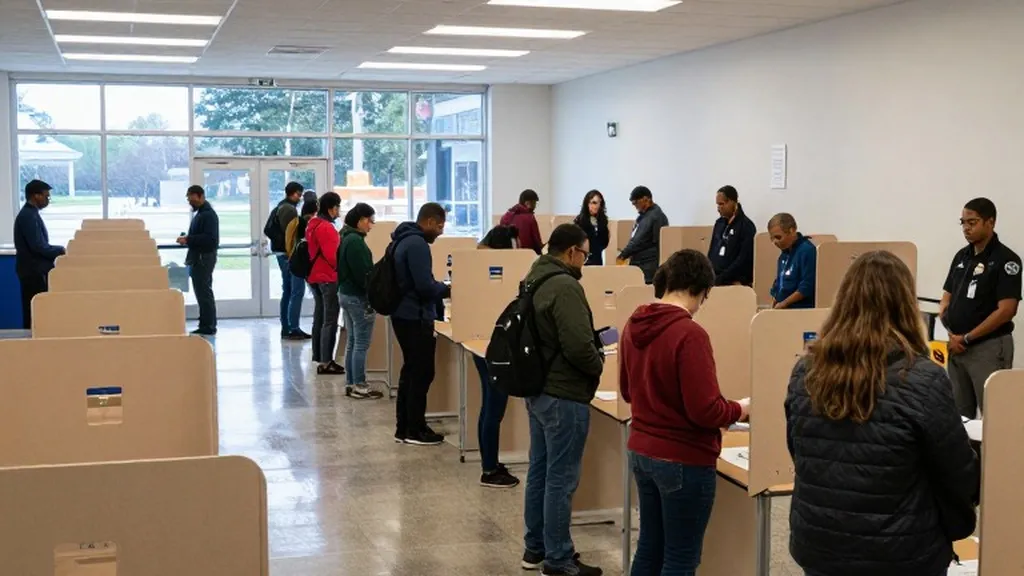
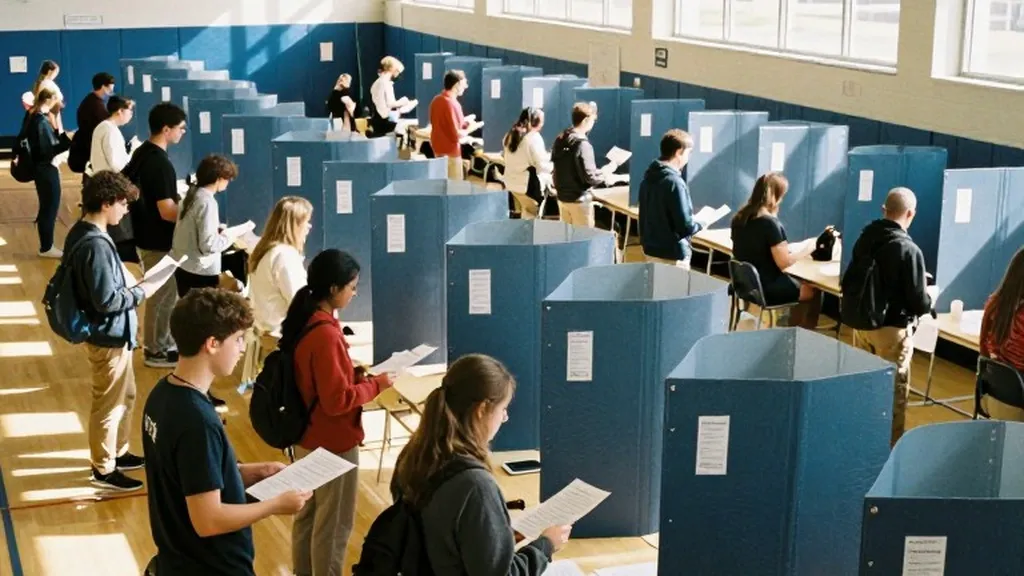
Voters today are using various methods to cast their ballots. Poll hours vary by state, with many locations open from 7 a.m. To 8 p.m. Local time. Some states, such as California and Colorado, rely heavily on mail-in voting. The U.S. Postal Service has added hours and staff to ensure that mail ballots are counted on time. As polls open, the 18 to 18 split and the 19 open seats will be the primary factors in determining the new map of state leadership.
The election also features new congressional maps in six states following mid-decade redistricting: California, Florida, Missouri, North Carolina, Tennessee, and Texas. Ohio is also using a new map. These changes may influence voter behavior and candidate strategy in the governor races. As voters head to the polls, the specific outcomes in the nine battleground states and the 19 open seats will define the next four years of state government.