New research limits lunar city size due to water scarcity
Harvard and Durham University scientists warn that current water estimates on the moon only support small settlements for long periods.
By Alina Carter ·
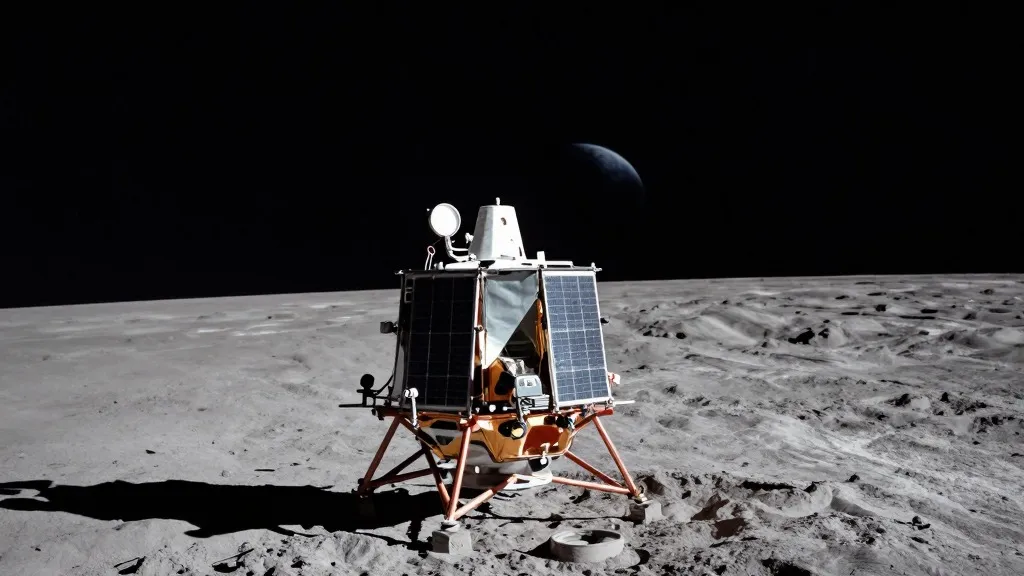
A new study challenges the timeline for massive lunar settlements by highlighting a critical shortage of water resources. The analysis suggests that the moon's surface cannot sustain the large populations envisioned by major space industry leaders without significant changes in extraction technology.
The debate gained momentum in February when Elon Musk, the chief executive of SpaceX, stated on social media that the company had pivoted from Mars colonization to building a self-growing city on the moon. Musk argued this goal could be achieved in under a decade, a much faster timeline than the more than 20 years required for Mars. Jeff Bezos, head of Blue Origin, has also predicted that millions of people will live in space by 2045. These ambitious claims prompted a closer look at the physical constraints of the lunar environment.
Martin Elvis, a senior astrophysicist at the Smithsonian Astrophysical Observatory, and Jonathan McDowell, an honorary professor at the Durham University Space Research Centre in England, examined these projections. Their paper, published in the journal Frontiers in Space Technologies, evaluates two primary requirements for life support: power and water. The researchers determined that generating sufficient energy is the more manageable challenge. Solar and nuclear sources are calculated to be adequate to power a population of one million people on the lunar surface.
Water presents a far more complex obstacle. Current scientific estimates place the total amount of water on the moon at roughly one billion tonnes. Most of this supply is believed to be located in permanently shadowed regions near the poles, areas that never receive direct sunlight. Under the assumption of 98 percent water recycling, a rate comparable to that of the International Space Station, the researchers found that a population of one million could be sustained for only about 100 years.
Elvis noted that while one billion tonnes sounds substantial, the context is important. He compared the volume to an aquarium the size of Central Park filled with water until the Statue of Liberty was just submerged. He described the supply as a small lake, arguing that such a quantity would not support a large city for an extended period. A much smaller settlement, however, would fare significantly better. A town of 10,000 residents could last for centuries under the same conditions.
McDowell emphasized that if humanity aims to cover the moon with cities as depicted in science fiction, new methods for acquiring water are necessary. He stated that the current supply is insufficient for that scale. He added that the findings are not meant to be discouraging, noting that negative outcomes only occur when one attempts tasks that are fundamentally unworkable.
The baseline assumptions used in the study may still be overly optimistic. Elvis suggested that the one-billion-tonne figure could be 20 or 30 times larger than the actual recoverable amount. He estimates that only one-third to one-half of the existing water would be accessible, meaning the reliable supply might be just one percent of the initial figure. If this lower estimate is correct, the 100-year sustainability window for a million people shrinks to roughly one year.
The physical state of the lunar water also complicates extraction efforts. Gordon Osinski, a professor of planetary geology at Western University in London, Ontario, pointed out uncertainties in satellite measurements. He believes the water is present but requires on-the-ground confirmation. Osinski suggested the water might resemble Arctic permafrost, consisting of sub-millimetre ice crystals mixed into the soil, which would make extraction difficult.
The next steps involve further verification of these geological conditions. While the study provides a sobering look at the limits of current knowledge, it underscores the need for precise data before major infrastructure projects begin. The research does not rule out lunar expansion, but it places a stricter ceiling on population size and duration for the foreseeable future.