Nvidia’s Acquired Robot Duck Becomes Holiday Phenomenon After Viral Keynote Debut
Following a charming demonstration at GTC Berlin, preorders for the Microduck robot have surged past 20,000 units, positioning it as a top contender for the best-selling toy of the season.
By Petra Murphy ·
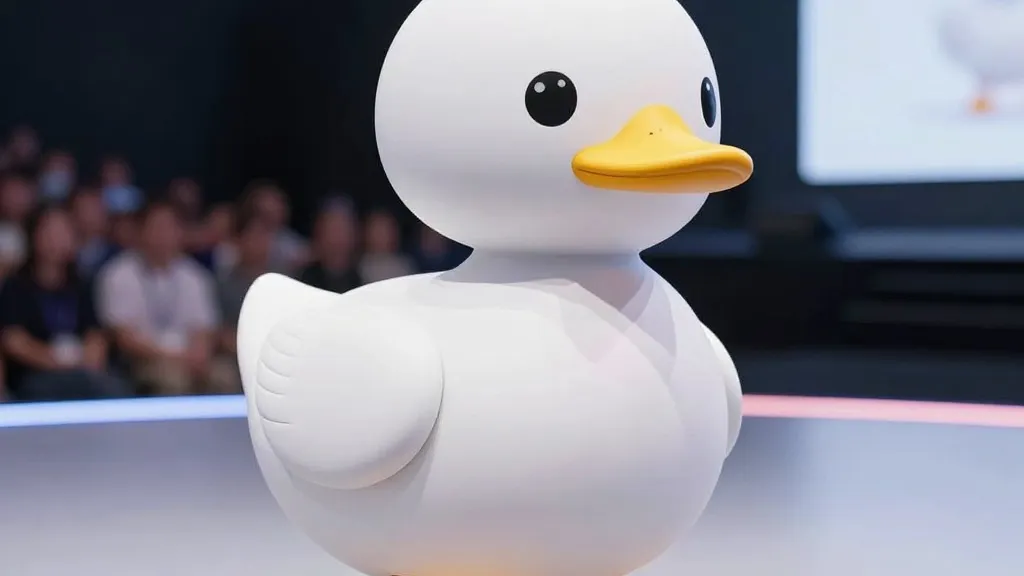
Jensen Huang, the chief executive of Nvidia, recently captivated the technology world not with a complex architectural diagram, but by playing with a flock of small, waddling robots during his keynote address at the GTC Berlin conference. The interaction, which featured the Microducks stomping their feet, emitting high-pitched mechanical noises reminiscent of classic sci-fi droids, and performing somersaults on voice commands, quickly spread across social media. Within 24 hours of the video going viral, preorders for the device had exceeded 20,000 units, a figure confirmed by Hugging Face CEO Clem Delangue on Twitter.
The rapid surge in demand suggests that the Microduck is on track to become one of the most sought-after gifts of the upcoming holiday season. With deliveries scheduled to arrive in time for Christmas, the robot has already generated significant buzz beyond the typical tech enthusiast demographic. Delangue has suggested that the device could potentially become the best-selling robot of the year, noting that promotional materials frequently feature adults engaging with the units, indicating a broad appeal that extends well into the adult market.
The Microduck is an open-source device originally produced by Pollen Robotics. The company’s trajectory shifted significantly in 2025 when it was acquired by Hugging Face. That acquisition created a direct link to Nvidia, which purchased Hugging Face in September of this year, effectively making the Microduck an Nvidia-owned product. This is not Hugging Face’s first foray into robotics, as the company previously released the Reachy Mini, another compact and popular robotic device.
The technical foundation of the Microduck relies heavily on Nvidia’s proprietary technology stack. During the development phase, simulations of the robots were used to teach them fundamental behaviors, such as walking, sitting, and standing, which are pre-installed on the hardware at the time of shipment. This simulation-to-reality training approach ensures that each unit arrives with a reliable set of core functions ready for immediate use.
Beyond the pre-programmed movements, Pollen Robotics emphasizes the device’s extensibility. Owners are encouraged to train their individual units with new tricks and behaviors. The company has built a community-driven framework that allows users to share these custom-trained actions with other enthusiasts, fostering a collaborative ecosystem around the hardware.
The timing of this viral moment is notable for the broader AI industry. It arrives during a week marked by significant anxiety regarding the sector’s role in recent cyberattacks. As the industry grapples with serious questions about the impact of AI on global security, the Microduck offers a contrasting narrative: one of accessibility, charm, and tangible fun. The device serves as a reminder that artificial intelligence and robotics can also be approachable and entertaining, rather than solely complex or intimidating.
The visual appeal of the robots played a crucial role in their commercial success. The footage of Huang interacting with the devices highlighted their cute aesthetic and responsive nature, making them highly shareable content. This organic viral spread has likely contributed to the high preorder numbers, as the robots became a topic of discussion well beyond the confines of the GTC conference audience.
As the holiday shopping season begins in earnest, the Microduck is positioned to capitalize on the current momentum. The combination of low barrier to entry, open-source flexibility, and the backing of major tech players like Nvidia and Hugging Face provides a strong foundation for sustained interest. The device represents a shift in consumer robotics toward smaller, more personal, and emotionally engaging forms of interaction.
Looking ahead, the success of the Microduck will likely influence how other companies approach the development of consumer-facing robots. The focus on community sharing and user-generated content may become a standard feature in future robotic releases. For now, the Microduck stands as a distinctive success story, proving that even in a complex technological landscape, simple charm can drive massive commercial adoption.
The next phase for the device involves scaling production to meet the high demand generated by the viral launch. With tens of thousands of units already reserved, the supply chain will be tested as manufacturers work to ensure that every preordered unit is delivered before the holiday rush. The Microduck’s journey from a demo prop to a potential holiday blockbuster illustrates the power of viral marketing in the modern tech landscape.