Netanyahu and Eisenkot Claim Lead as Israel Election Deadlocks
With 48.4 percent of votes counted, the two main blocs are projected to fall short of the 61 seats needed for a majority, leaving the government in limbo.
By Tunde Bailey ·

With 48.4 percent of ballots tallied, Israeli media projected that Prime Minister Benjamin Netanyahu’s bloc would win 55 seats while challenger Gadi Eisenkot’s bloc would capture 50. Neither side has the 61 seats required to form a government in the 120-seat Knesset. Arab parties are projected to hold 15 seats, leaving both major camps short of a majority.
Both leaders asserted their right to lead the country after the Tuesday vote, despite the stalemate. Netanyahu, 77, called for a right-wing national government. Eisenkot, 66, stated that voters had turned away from the longtime leader and urged him to retire from politics. Neither camp declared victory immediately.
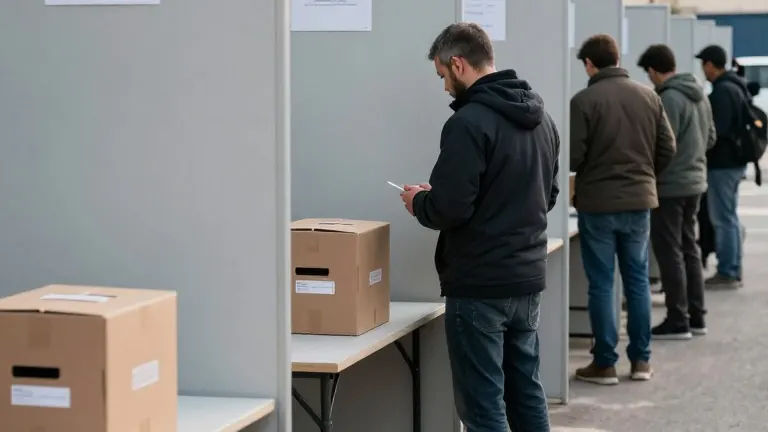
The Central Elections Committee continued counting ballots on Wednesday, with definitive results expected by Thursday. This is the first national vote since the Hamas-led attack of Oct. 7, 2023. Turnout reached 77.7 percent, the highest in more than two decades and about seven percentage points above the 2022 election.
Forming a coalition is complicated for both men. Netanyahu’s bloc has ruled out a government with Arab parties. Eisenkot, who leads the Yashar party and is a former military chief, has also all but ruled out including Arab parties. The far-right religious parties led by Itamar Ben-Gvir and Bezalel Smotrich are projected to take a combined 13 seats within Netanyahu’s bloc.
Netanyahu spoke to supporters at Likud headquarters in Jerusalem after 3 a.m. local time. He pointed to Israel’s military successes and raised the possibility of renewed joint action with U.S. President Donald Trump against Iran. He said Israel faces a singular historical opportunity to remove the existential threat of Iran once and for all.
Trump, who endorsed Netanyahu, commented after a campaign trip to Texas. He described the race as pretty close and suggested the endorsement had helped. He added that Netanyahu might be winning or tie, calling a tie sort of considered a win in that case because it’s a big chess man match.
Eisenkot said the public voted against Netanyahu remaining in office. He called on the security establishment to stand firm against any effort to put political interests ahead of Israel’s security. Eisenkot lost a son and two nephews in the Gaza war. He entered politics four years ago, joined Netanyahu’s war cabinet after the 2023 attack, then quit eight months later criticizing the prime minister’s leadership.
Voters weighed the trauma of Oct. 7, when Hamas killed 1,200 people and took 251 hostage. They also considered the subsequent wars with Hezbollah in Lebanon and with Iran. Netanyahu has faced criticism for the security failure but argues he made Israel safer by killing top leaders of Hamas, Hezbollah, and Iran. If neither side can form a government, another election may be needed.