Genetic Warfare: A $1.2 Billion Bet on Engineered Canines
Warhound has emerged from stealth with $200 million in funding to genetically modify dogs for military and law enforcement duties, aiming to reduce reliance on European imports.
By Alina Carter ·
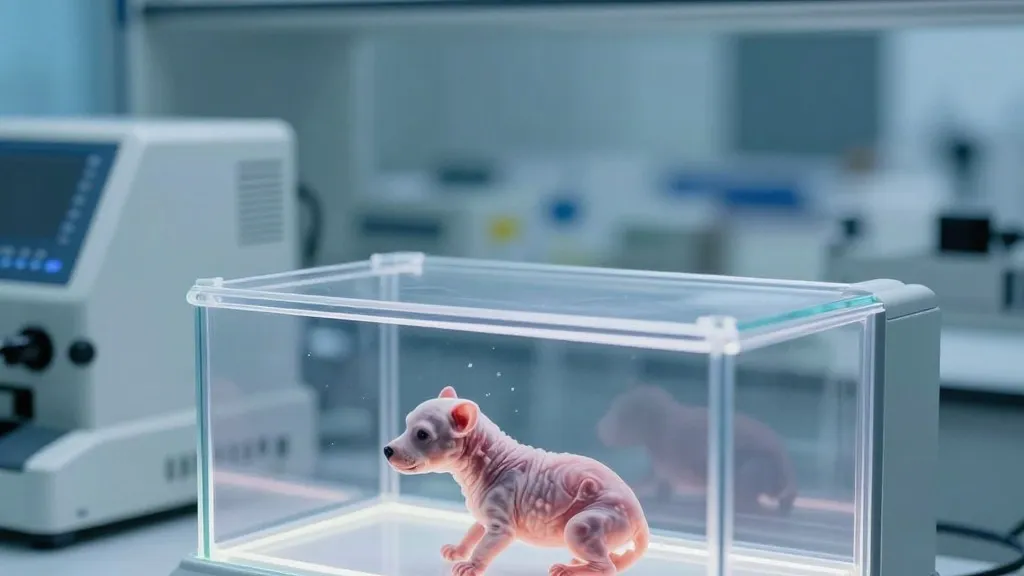
The figure that immediately captures attention is not the $200 million in fresh capital, but the $1.2 billion valuation assigned to a company whose primary product does not yet exist in a single living form. Warhound, a venture backed by Sequoia, 8VC, Corner Ventures, and In-Q-Tel, has officially exited stealth mode. The latter investor is notable for its ties to the CIA and other U.S. intelligence agencies, signaling a defense-oriented focus for this new entity. The company’s mission is to genetically engineer dogs for the U.S. military, law enforcement, and emergency response teams, addressing a perceived gap in the current supply chain.
The impetus for this venture appears to be a logistical vulnerability rather than a purely technological novelty. According to the company’s launch materials, over 80% of the U.S. military’s working dogs are sourced from Europe. Furthermore, the announcement claims that fewer than half of these imported animals are ultimately fit for service. This reliance on foreign nations for a critical military asset has created a strategic dependency that Warhound intends to eliminate by developing a domestic, genetically optimized alternative.
The genesis of the project traces back roughly a year to a conference where Colossal Biosciences’ Ben Lamm met Anduril’s Palmer Luckey. Luckey reportedly expressed a desire for more action regarding the state of military working dogs. Lamm subsequently investigated the breeding practices of these animals, discovering that many fail training due to inherited issues such as poor eyesight, cancer, hip dysplasia, or muscle atrophy. This research convinced Lamm that genetic enhancement could improve health, longevity, and specific performance traits like speed and olfactory sensitivity.
The technical approach involves a biobank of cell lines derived from top-performing breeds, specifically the Belgian Malinois and German Shepherd. The team plans to edit these genes, removing predispositions to disease and adding traits suited for demanding missions. The goal is to create a new type of dog that is inherently more robust and capable than its natural counterparts. This biological engineering is being supported by Colossal Biosciences, which holds equity in Warhound and licenses its technology to the new venture.
While the biology is the core of the project, the hardware comes from Anduril. The defense tech company will provide software and equipment, including protection vests and goggles, designed to enhance situational awareness for both the dogs and their handlers. Lamm described the concept as adding capabilities "on top of the dog, not in the dog," such as bulletproof vests embedded with data sensors. These sensors would transmit information back to handlers, improving coordination and potentially protecting the human operators as well.
The operational timeline is ambitious. The first batch of dogs is currently being cloned and incubated, with births expected in early 2027. The company aims to have these animals in service within two years. Viagen, another entity under Colossal’s umbrella, will handle the cloning process, leveraging technology that Lamm says has a high success rate and is already used in endangered species programs. Palmer Luckey serves as a partner in the venture but holds no equity, distinguishing his role from that of Colossal.
Regarding the business model, Warhound has not yet determined the cost per animal. It expects its primary customers to be first responders, the Department of Defense, military service groups, and police forces. When asked about regulatory hurdles, Lamm stated that the company has already briefed numerous government groups. He also noted that each dog will undergo standard military working dog training and be managed by the purchasing agency, addressing concerns about civilian safety and integration.
To address ethical considerations, the company is working under the guidance of the American Humane Society to certify its training program. There is also a plan for the dogs’ retirement, with the hope that they will enter the Society’s Military Working Dog Reunification Program or other care initiatives. The American Humane Society issued a statement applauding the invitation for the organization to be involved, emphasizing its science-based and ethical approach to ensuring the animals are treated humanely.
The move represents a significant shift in how defense assets are developed, blending biotechnology with traditional defense hardware. By combining Colossal’s gene-editing expertise with Anduril’s tactical gear, Warhound is positioning itself to solve a specific supply chain problem through a complex biological and technological solution. As the first clones begin to develop, the industry will be watching closely to see if the engineered canines live up to the high valuation and high expectations set by their backers.