French State Expands Police Presence to 70,000 as Second Protest Wave Hits Economy
A massive deployment of security forces accompanies new demonstrations in France, prompting significant changes to commercial operations and public transit ahead of a key election year.
By Alina Carter ·
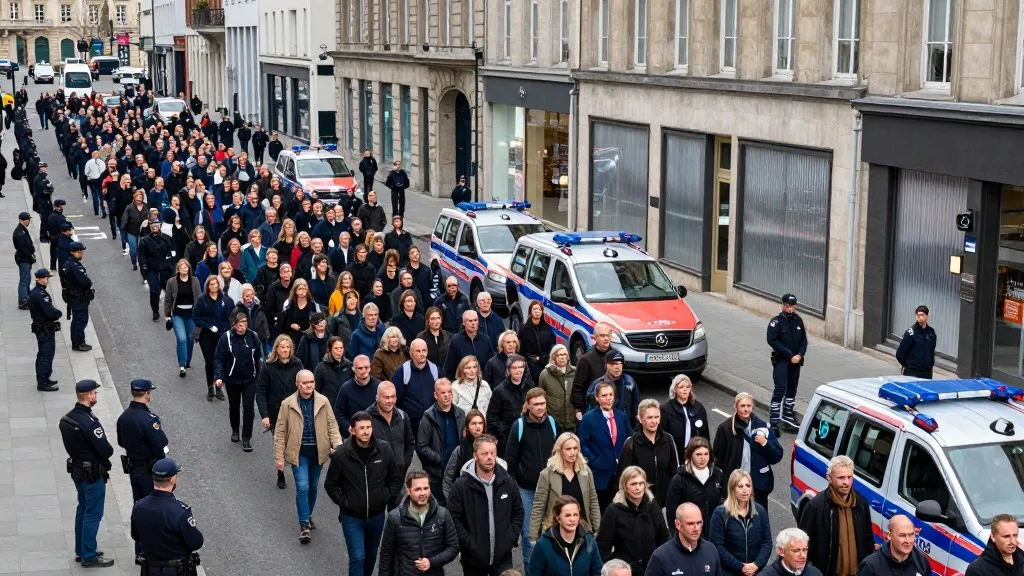
The French government has mobilized over 70,000 police officers and gendarmes nationwide as a second wave of mass protests began on Saturday. This significant increase in security personnel, which represents a 20 percent rise in duty staff compared to the previous weekend, is designed to manage economic disruption and prevent a recurrence of the severe unrest seen last week. The deployment marks a major operational shift in how the state manages civil disturbance, with the elite RAID unit supporting broader police efforts rather than focusing solely on crowd control.
The demonstrations are driven by deteriorating conditions in the education sector and a sharp rise in the cost of living. The current unrest began in mid-September when high school students blockaded schools over infrastructure issues and teacher shortages. Although President Emmanuel Macron met with student representatives on Friday to promise more teachers and a major overhaul of the university admission system, students have indicated they will continue to mobilize until specific actions are taken. This sustained pressure has now evolved into a broader movement involving teachers, nurses, ecologists, and union representatives.
In Paris, the route for the main march was restricted to the southeastern edge of the city, running from Porte d'Italie to Porte de Vincennes. This last-minute change from a previously negotiated central route angered many participants, who viewed the restriction as a tactic to minimize the visibility of the movement. Emma, a protester and podcaster, described the route change as an attempt to drain the energy from the protests, while Monica, a retired educator, felt the authorities were trying to make the movement invisible. Despite the logistical changes, marchers maintained a generally peaceful tone, chanting slogans and calling for the resignation of the president.
The economic impact on the capital was immediate and tangible. In central Paris, many businesses closed their doors and installed protective panels on shop windows, while some retailers hired private security to safeguard their assets. At least 24 metro stations were closed at the request of the police prefecture, disrupting daily commuting patterns. High-profile cultural institutions also suspended operations, with the Louvre and the Musee d'Orsay closing for the day. The Art Basel Paris event, a major draw for the international art market, cancelled its weekend program, signaling a cautious approach to large gatherings in the city.
Across the country, the security posture was stringent. In Lyon, police used tear gas to disperse approximately 150 demonstrators, while in Montpellier, Rouen, and Nice, protests were banned in downtown areas. A union march in Marseille was permitted but under strict conditions. By early Saturday afternoon, authorities reported at least 135 arrests nationwide and the seizure of various weapons, acknowledging that the overall situation remained calm despite the heavy presence of law enforcement.
This latest wave of protest follows a volatile week on October 17, when largely peaceful demonstrations were marred by looting, vandalism, and clashes. Official figures indicate that thousands of businesses were damaged during that period, with more than 2,000 people taken into custody. Interior Minister Laurent Nunez emphasized the need for a robust security response to avoid a repeat of those events, highlighting the strain on public resources and private commercial interests alike.
The political stakes are high as the country heads toward a pivotal presidential election in about six months. President Macron is barred from seeking a third term and will leave office in 2027. Marine Le Pen, who has campaigned on restoring law and order, currently leads recent polls by a wide margin. The timing of the protests is creating a complex backdrop for her National Rally party, which held its congress in Orleans on Saturday. Thousands gathered to shout anti-fascist slogans in counter-protest, with authorities expecting between 20,000 and 30,000 participants in that city.
Looking ahead, the Yellow Vest movement has announced its own protest for October 31, suggesting that the cycle of demonstrations will continue. For businesses and market observers, the focus remains on how the government balances its economic objectives with the need to manage social unrest. The next few weeks will be critical in determining whether the promised reforms in education and cost-of-living measures are sufficient to de-escalate the situation before the election campaign intensifies.
More Business · World news · Customer Complaints · Report a business · Got a Story?