Gunman Kills One in Paris Suburbs as France Prepares for Major Police Deployment
A racially motivated shooting near Paris has triggered a national security response, with 70,000 officers expected to be deployed for upcoming demonstrations.
By Alina Carter ·
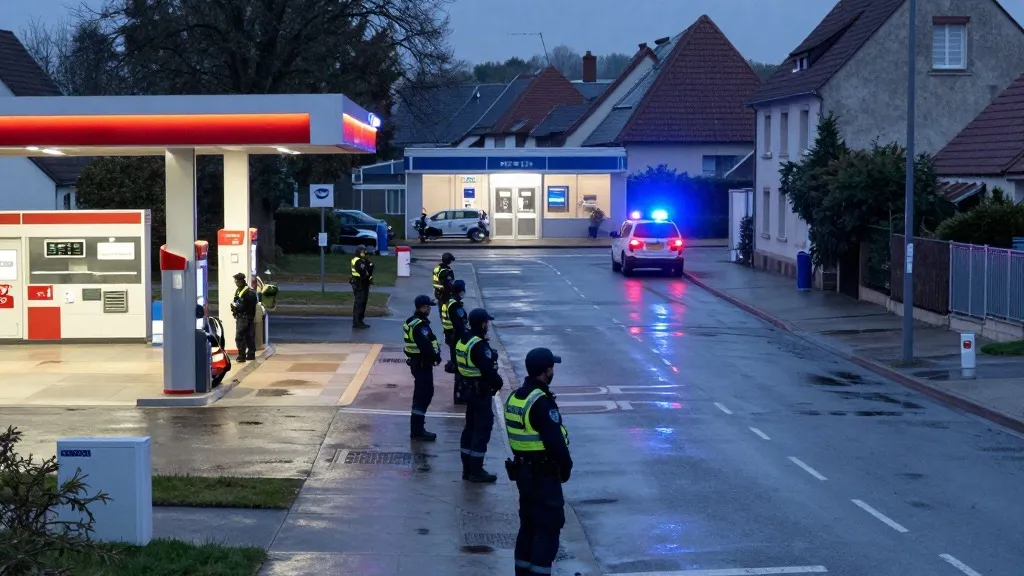
The immediate financial and security impact of a fatal shooting in northern France has centered on the deployment of 70,000 police officers, a move designed to manage both the aftermath of a terrorist attack and ongoing nationwide protests. The incident, which occurred on Friday, resulted in one death and five injuries in the suburbs of Trappes and La Verriere, areas with significant immigrant and Muslim populations. Authorities have classified the event as a racially motivated terrorist crime, prompting Prime Minister Sebastien Lecornu to declare that all judicial and security resources are fully mobilized. This significant allocation of public resources marks a sharp escalation in state spending on public order, coming at a time when the government is already managing the fiscal pressures of cost-of-living and student unrest.
The timeline of the event began at approximately 10:30am local time on Friday, October 23, 2026. The suspect, a 39-year-old man identified as Kevin T., drove through the working-class communities, firing an automatic weapon at a petrol station, a medical centre, and a children's playground. The rampage lasted for roughly 15 minutes before police apprehended the suspect. The quick containment of the threat was critical, as the initial reports indicated the attacker was operating with a specific intent to target individuals based on their ethnicity and religious appearance.
Local MP Laurent Mazaury provided the first official insight into the motive, stating that the suspect told officers he wanted to "kill foreigners" and that he believed they were facing a racist individual. The victim who died was identified as Pengo Bassio Wangi, a young Black man. Among the five injured was a 12-year-old girl of North African descent who was shot eight times and transported to a children's hospital for surgery. Prosecutors have indicated that three of the five injured individuals are in critical condition, which will likely influence long-term healthcare costs and insurance claims for the families involved.
The economic and political context of the attack is significant, as it occurred while France is grappling with violent student protests and rising living costs. The government plans to deploy 70,000 police officers on Saturday, October 24, 2026, to manage expected demonstrations. This massive mobilization represents a substantial logistical and financial undertaking for the state. Some far-right voices have already begun to link the unrest to Muslim youths, a narrative that could influence voter sentiment and future policy decisions regarding social spending and public safety.
Interior Minister Laurent Nunez confirmed that investigations are continuing and described the incident as "clearly a terrorist crime." Prosecutors are currently examining whether the suspect conspired with a broader terrorist group. A member of the suspect's immediate family circle has also been taken into custody, suggesting that the investigation may expand beyond the primary shooter. The discovery of a World War II era semiautomatic weapon and tear gas grenades in the suspect's car indicates a level of preparation that may lead to further scrutiny of arms procurement and storage regulations.
President Emmanuel Macron labeled the incident a "racist terrorist attack" and a "turning point in the life of our Republic and our nation." His administration is using the event to underscore the need for continued fiscal and structural investments in combating racism and enhancing national security. The President stated that France remains determined to fight racism in all its forms, a sentiment that is likely to be reflected in upcoming budget proposals and legislative priorities.
Trappes mayor Ali Rabeh, who has Moroccan roots, described the attack as "objectively a racist attack, probably Islamophobic." He noted that the victims could easily have been his own relatives and stated, "Her crime was probably being of colour." This local perspective highlights the community-level impact of the event, which may influence regional economic development and the demographic makeup of the area in the coming years.
The girl's mother raised questions about the specific targeting of her daughter, noting that she was born in Trappes and has the right to build her life in France. She asked whether her daughter was targeted because of her headscarf, a question that resonates with broader debates on religious expression and its economic and social implications. The incident has intensified public discourse on the treatment of visible minorities in the French labor market and public spaces.
The attack has occurred against a backdrop of growing anti-Muslim hostility across Europe. Last week, the European Parliament passed a resolution calling for an EU strategy against Islamist entryism and the Muslim Brotherhood network, a move described by researcher Farid Hafez as a major symbolic victory for anti-Muslim forces. This political shift may influence trade relations and cultural exchanges between France and other European nations, potentially impacting cross-border economic activity.
In the United States, California's attorney general reported that anti-Muslim hate crimes rose 54 percent in 2025, from 24 to 38. Amnesty International stated in June that Islamophobic violence in the United Kingdom had reached "emergency levels." These international data points suggest a broader trend that may affect the reputation of European cities as safe places for business and tourism, potentially influencing investor confidence in the region.
More Business · World news · Customer Complaints · Report a business · Got a Story?