Democrats Sweep Congress, Gaining Senate and House Control in 2026 Midterms
Voters delivered a historic shift in power, giving Democrats majorities in both chambers and control of most statehouses.
By Tunde Bailey ·
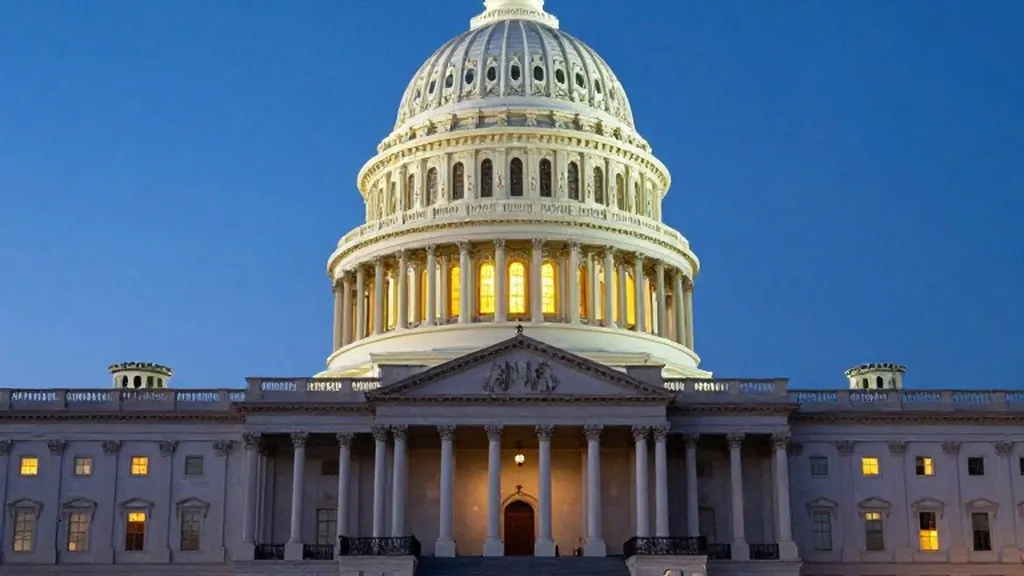
Democratic candidates secured majorities in both the U.S. House and Senate on Tuesday, November 3, 2026, marking a decisive shift in national power. According to results compiled by Ballotpedia as of 4:00 PM ET on November 6, Democrats won at least 250 seats in the House and 54 seats in the Senate. This outcome ends Republican control of both chambers and grants Democrats a significant legislative advantage for the next two years. The party also won a majority of governorships and state legislative chambers, expanding its reach beyond Washington.
In the U.S. Senate, Democrats flipped seven seats from Republicans to take control of the chamber. The specific states where control changed include Iowa, Kansas, Maine, North Carolina, Ohio, South Carolina, and Texas. This net loss of at least seven seats for the Republican Party places the 2026 election in the top 20 percent of election years in terms of seat swings against a president's party. Ballotpedia defines this threshold as a wave election. The U.S. House did not reach that specific wave threshold, but Democrats still gained at least 41 seats, securing a 250-157 majority with results still being reported.
The shift in state power was equally pronounced. Democrats won 22 of the 36 gubernatorial races on the ballot, while Republicans won 12. Two governorships remained uncalled as of the latest reports. This result gives Democrats a majority of governorships for the first time since before the 2010 elections. In state legislative chambers, Democrats won 46 of the 88 races, compared to 39 for Republicans. Twelve state legislative chambers changed party control, with all twelve shifting to Democratic hands. No state legislative chamber shifted from Democratic to Republican control.
Democrats also gained control of other key state offices. They won 21 of the 34 attorney general races and 21 of the 33 secretary of state races. In both categories, all changes in party control went to the Democrats. Nationally, Democrats now hold at least 20 state government trifectas, where a party controls the governorship and both legislative chambers. Republicans hold 16 trifectas. Eight states have divided governments. Eleven states changed their trifecta status, with six shifting from divided governments to Democratic trifectas and five shifting from Republican trifectas to divided governments.
The election results reflect a broad wave of dissatisfaction with the current administration. According to the AP Voter Poll, three-quarters of voters said they feel angry or dissatisfied with the country's current trajectory. The economy was a primary concern, with three-quarters of voters saying the economy is not so good or poor. About 8 in 10 voters reported that inflation has caused a moderate or severe financial hardship for their households. Government corruption and the cost of living were cited as crucial issues by roughly half of voters, surpassing concerns about immigration enforcement and the war in Iran.
Republican strategists had hoped their significant financial advantage would stem the tide. According to OpenSecrets, the 2026 midterm elections are expected to be the most expensive in history. In the Senate race alone, outside groups spent at least $2 billion. Republican-affiliated groups spent roughly 60 percent more than Democratic-aligned groups. Despite this expenditure, the party lost at least seven Senate seats. Elon Musk spent nearly half a billion dollars on the elections, but the record expenditure yielded limited results for the world's richest man.
The defeat has immediate implications for the White House. President Donald Trump has replaced White House chief of staff Susie Wiles with Stephen Miller. Miller is known as a hardline architect of the administration's immigration agenda. This personnel change comes days after the Republican losses and about a week before a scheduled hearing where a special master was slated to evaluate the accuracy of a list of alleged noncitizens. Trump's new chief of staff is expected to lead the White House through a difficult lame duck period, with Democrats likely to scrutinize his record in his powerful new role.
Democrats are already turning their attention to the policy agenda. Representative Richard Neal, who is expected to regain the chairmanship of the House Ways and Means Committee, said he is committed to reversing President Trump's unjustified tariffs and backroom deals on trade. The party also aims to check the president on foreign policy, though analysis suggests their leverage may be limited in some areas. The Democratic primary for the 2028 presidential election is likely to be crowded and unpredictable, exposing the party's divide over how to win back the White House.
Voters elected a historic slate of women, candidates of color, and other underrepresented politicians during this cycle. This reshaping of political leadership reflects the demographic changes in the electorate. In Georgia, Keisha Lance Bottoms was elected as the state's first Democratic senator in more than two decades and the first Black woman governor in the country. In Kansas, Rev. Adam Hamilton, who leads the largest United Methodist church in the state, was elected to the U.S. Senate, ending a period where the state had not sent a Democrat to that chamber since 1932.
The Mississippi U.S. Senate race remains a focal point for the final days of counting. Democrat Scott Colom has not yet been declared the winner, but he is leading in the early tallies. If he wins, he would become the first Black senator from the state since post-Civil War Reconstruction. The contest will hinge on the processing of absentee and provisional ballots, which are due by Tuesday. Local officials are examining these ballots under the watch of lawyers from both campaigns. The precise number of outstanding ballots is not known, but the process is expected to continue through the week.