Democrats Seize Full Control of Congress as Voters Reject Trump Era
A sweeping Democratic wave has secured majorities in both chambers, marking a decisive shift in power driven by economic concerns and frustration with the Iran war.
By Alina Carter ·
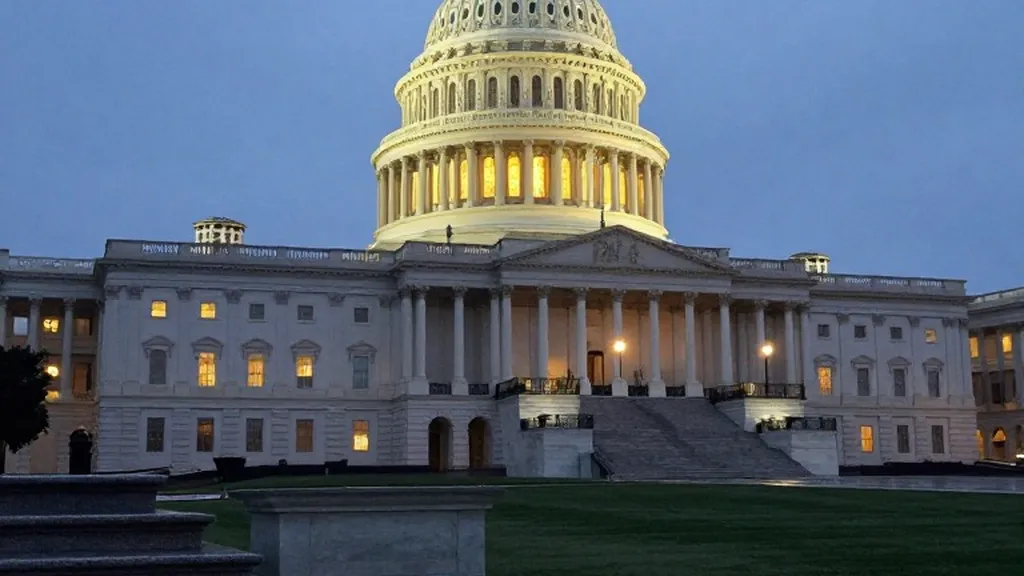
Voters across the United States delivered a decisive mandate for change on Tuesday, handing Democrats control of both the House of Representatives and the Senate in a midterm election that functioned as a sharp rebuke of President Donald Trump. According to Ballotpedia, Democrats secured 20 of the 35 contested Senate seats, while Republicans won 13, with two races still pending. In the House, Democrats captured 228 seats compared to the Republican 138, with 69 races remaining uncalled. This outcome ends two years of unified Republican control and establishes a divided government where Congress is poised to reassert its authority over the executive branch.
The scale of the Democratic victory is evident in the net gains across both chambers. In the Senate, Democrats flipped seven seats from Republican control, a margin that far exceeded the four-seat net gain they needed to secure a majority. Ballotpedia data confirms that the party now holds at least 54 seats, providing a comfortable cushion for legislative maneuvering. In the House, the net change favors Democrats by 27 seats, a dramatic reversal from the slim Republican majority held before the election. The Associated Press notes that this wave swept through traditionally Republican strongholds, including wins in South Carolina and Kansas, where Democrats had not elected a senator since 1932.
President Trump, who is not on the ballot, attributed the losses to his party's candidates and the impact of the war in Iran. On Wednesday, he led reporters on a tour of the new White House ballroom, stating that the Iran conflict was necessary and that he believed he would have won if he were running. However, the AP Voter Poll suggests that Trump was a drag on his party's performance. Approximately two-thirds of voters indicated that the president does not have the right priorities, a sentiment that strongly correlated with support for Democratic House candidates. Only 40% of voters nationwide approved of how Trump is handling the presidency, a figure that weighed heavily on down-ballot races.
The war with Iran emerged as a critical factor in the election results, with about 60% of voters stating that the military action was the wrong decision. According to the AP Voter Poll, nearly all voters who supported Democratic House candidates viewed the war negatively, while roughly 80% of Republican supporters viewed it positively. Vice President JD Vance, who had previously advocated for restraint in overseas military intervention, publicly broke from the president's defense of the conflict. Vance issued a statement suggesting that losing the Senate for six years was a heavy price to pay for the war, a comment that highlighted the internal rifts within the Republican party following their defeat.
Economic concerns remained the primary driver for voters, with three-quarters describing the economy as poor or not so good. About 80% of respondents reported that inflation had caused financial hardship for their households, particularly regarding gas and grocery prices. Democrats campaigned on a platform of lowering costs of living, and House Leader Hakeem Jeffries, who is expected to become the first Black speaker of the House, promised a 100-day agenda focused on these issues. The AP notes that voters were angry over high prices and the war, seeking a government that would prioritize their economic stability over political theater.
The failure of Republican redistricting efforts also played a significant role in the outcome. At the urging of President Trump, Republicans in eight states redrew congressional district boundaries last year to gain an advantage. The AP reports that this strategy fell flat in key states such as Alabama, Florida, and Texas. In Texas, for example, Democrats unseated incumbent Republican Monica De La Cruz in a district that had been reshaped to favor the GOP. Similarly, in Florida, Democratic incumbents won reelection in districts that Republicans had targeted for flips, with Jared Moskowitz noting that his opponents spent significant resources trying to defeat him without success.
Statewide races reflected the national trend, with Democrats gaining five governorships from Republican control. Ballotpedia reports that Democrats now hold 22 governorships compared to 12 for Republicans, a significant shift given that Republicans had held a majority of governorships since 2010. The party also gained control of state legislative chambers in several key jurisdictions. This expansion of Democratic power at the state level provides a stronger defense against the president's agenda and increases the party's influence over future redistricting maps.
The political landscape has been fundamentally reshaped, with new opportunities and challenges for governing. Democrats are eager to tackle high costs of living and confront the president's final years in the White House. Senate Democratic Leader Chuck Schumer stated that relief is on the way for the American people, while House Democrats vowed to launch a robust oversight agenda. The AP notes that the results present a fundamental reshaping of power in Washington, with Congress ready to challenge the executive branch after two years of unified Republican control.
For Republicans, the defeat marks a period of reckoning. House Speaker Mike Johnson will not seek reelection as party leader, according to people familiar with his plans. The party must now figure out what went wrong in a cycle where they lost control of both chambers and saw their numbers shrink significantly. The AP analysis highlights that voters were exhausted and exasperated by the president, leading to a broad rejection of the Republican party's direction. The new Congress will be tasked with navigating a divided government, with the potential for gridlock and intense legislative battles ahead.