Apple's 25-Year-Old iPod: The Pocket Revolution That Changed Music
Two decades and five years after its launch, the device that fit 1,000 songs into a deck-of-cards-sized box remains a pivotal moment in tech history.
By Petra Murphy ·
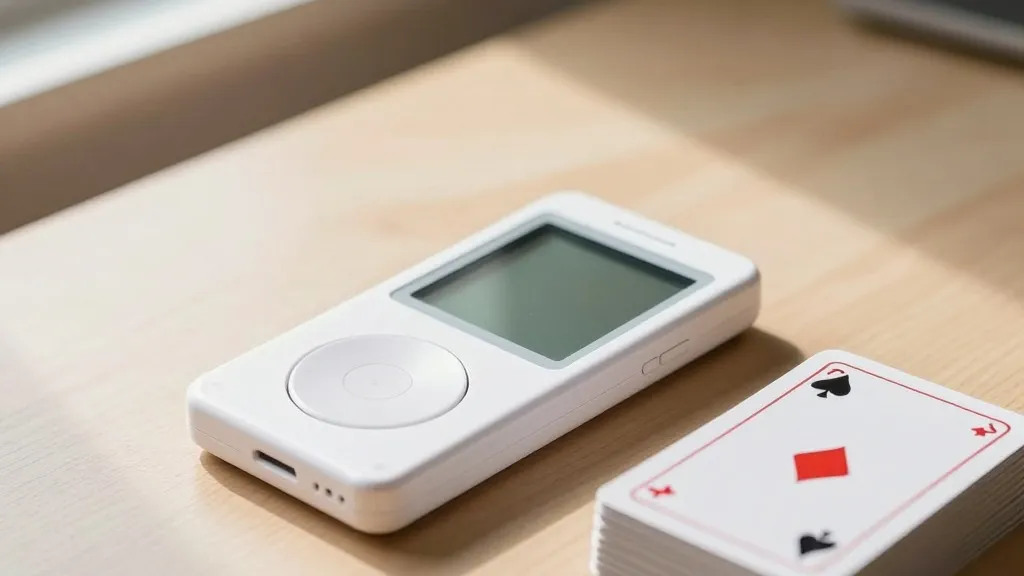
On October 23, 2001, Apple CEO Steve Jobs stepped onto a stage to introduce a device that would redefine how the world consumed music. He began by teasing a "breakthrough digital device that’s not a Mac," setting the stage for the unveiling of the original iPod. For a quarter-century, this pocket-sized player has remained a cultural touchstone, serving as the primary music companion for gadget enthusiasts before smartphones eventually rendered the category obsolete. The core promise of the launch was simple: for $399, consumers could carry their entire music library in their pocket.
The arrival of the iPod coincided with a critical period for Apple. By late 2001, Jobs had successfully guided the company through a revitalization, moving it beyond its earlier beige aesthetic into the Mac OS X era. Products like the iMac and iBooks were gaining traction, helping the Cupertino-based firm recover from the financial shock of the dot-com bubble burst. Jobs envisioned the Mac as the central hub of a user's digital life, connecting cameras, camcorders, and DVD players. He argued that music was the ideal entry point for this ecosystem because it was a universal passion with a massive market share, yet it lacked a dominant leader.
At the time of the announcement, the portable music landscape was fragmented. Established names like Sony, Creative, and Sonic Blue had existing players, but Jobs believed none had cracked the code for true digital music usability. The market offered four main options: CD players, MP3 CD players, flash-based devices, and hard-drive jukeboxes. Apple chose the hard-drive approach as its strategic entry point, aiming to offer substantial storage in a manageable form factor.
The device itself was introduced as an MP3 player capable of CD-quality sound and compatible with MP3, WAV, and AIFF formats. Its 5GB of storage allowed it to hold approximately 1,000 songs, calculated as typical pop tracks encoded at 160Kbps. Jobs described this capacity as encompassing the entire music library for most users. The physical design was a triumph of engineering, made possible by a 1.8-inch hard drive from Toshiba that was just 0.2 inches thick. The resulting player measured 2.4 by 4 by 0.78 inches and weighed 6.5 ounces, making it lighter than most cell phones of the era.
Despite its compact size, the original iPod featured advanced connectivity and usability. It utilized a single FireWire 400 cable for both charging and data transfer, a feature Apple marketed as unique to the device. Jobs claimed that this connection allowed an entire CD to be transferred in five to 10 seconds, a stark contrast to the five minutes required for USB transfers of the same data. To fill the device with 1,000 songs, users would wait roughly 10 minutes, compared to five hours on competing USB-based players. The unit also included a rechargeable lithium-polymer battery providing 10 hours of playback, with an 80% recharge in one hour.
The user interface was designed for single-hand operation, featuring a scroll wheel with a piezoelectric clicker for tactile feedback. This allowed users to quickly navigate by playlist, artist, or song. The design philosophy emphasized minimalism and durability, with Jobs highlighting the "legendary ease of use" associated with the Apple brand. During the live demonstration, the first track played was "Building a Mystery" by Sarah MacLachlan, showcasing the clarity and responsiveness of the new system.
A key differentiator was the integration with iTunes 2, which launched simultaneously. The software introduced features like MP3 CD burning and, crucially, Auto-Sync. This feature ensured that any music library curated on a Mac was automatically mirrored to the iPod upon connection, eliminating the need for manual file management. The device also functioned as a FireWire hard drive, adding utility beyond music playback.
The iPod line would continue to evolve, coexisting with the iPhone, which arrived in early 2007. For over a decade, both devices were staples of the Apple product lineup. However, the iPod's relevance gradually waned as smartphones matured. The final model, the 7th-generation iPod Touch, was released in May 2019. Although the product line was left without updates for a few years, it was officially discontinued in May 2022, closing the chapter on a device that had transformed the personal audio experience.