Redrawn Maps: Midterm Election Shifts
Nine states are using new district boundaries for the November 3 vote, a move that could alter the balance of power in the House of Representatives.
By Alina Carter ·
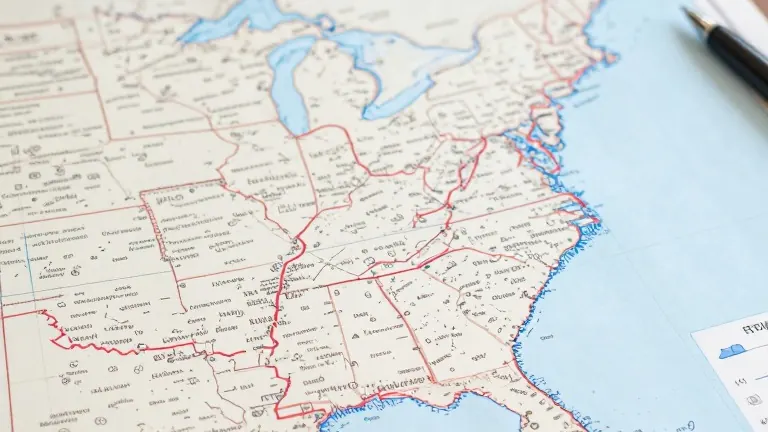
Nine states will use new congressional district maps for the November 3 general election. The changes came after Republicans and Democrats in various states moved to redraw district lines ahead of the midterm elections. The goal for both parties was to improve their chances of winning specific seats in the House of Representatives.
The Associated Press analyzed the potential impact of these redistricting efforts. Their findings suggest the new maps could benefit Republicans more than Democrats. The AP estimates Republicans could gain up to nine additional seats in the House. Democrats might secure up to six more seats under the new boundaries.
Redistricting typically happens once every ten years following the federal census. However, several states moved these changes forward this time. The shift was driven by a competitive fight for control of the lower chamber of Congress.
About 10% of all potential voters in the United States are now in a different congressional district than they were in the 2024 election. This affects millions of people across the country. In Texas, more than 6.9 million potential voters face a new district. In California, the number is over 6.3 million. Florida is seeing changes for more than 4.5 million voters. In Utah, a state court decision resulted in new districts for approximately 69% of the state's potential voters.
The states using new maps for the November election include Alabama, California, Florida, Louisiana, North Carolina, Ohio, Tennessee, Texas, and Utah. Most of the new maps appear to favor Republican candidates. California and Utah are the notable exceptions, where the changes may help Democratic candidates.
The push for these changes began in 2025. President Donald Trump urged Republicans to redraw congressional districts to help their party keep control of the House. Speaking in an August 2025 interview with CNBC, Trump argued that his party deserved five more seats based on the results of the 2024 presidential election in Texas. In response, California approved new districts that could give Democrats up to five extra seats. Governor Ron DeSantis of Florida signed a new map that improves the chances of Republicans winning four additional seats.
Alabama, Louisiana, and Tennessee also modified their districts. These changes followed a U.S. Supreme Court decision in April. That ruling weakened federal protections under the Voting Rights Act for districts with large minority populations.
Gerrymandering involves manipulating district lines to benefit a specific political party. One common method is packing voters of the opposing party into a few districts. This allows the majority party to win more surrounding districts with smaller majorities. Another method is cracking, where voters of the opposing party are spread across multiple districts to reduce their collective influence. A party can effectively draw these lines if it controls the state legislature and the governor's office, or if it has a large enough legislative majority to override vetoes.