Eisenkot Pushes 58-Seat Minority Government Plan Amid Opposition Bloc Fractures
Disagreements over minority rule and the replacement of Knesset Speaker Amir Ohana threaten to stall coalition formation ahead of the next elections.
By Petra Murphy ·
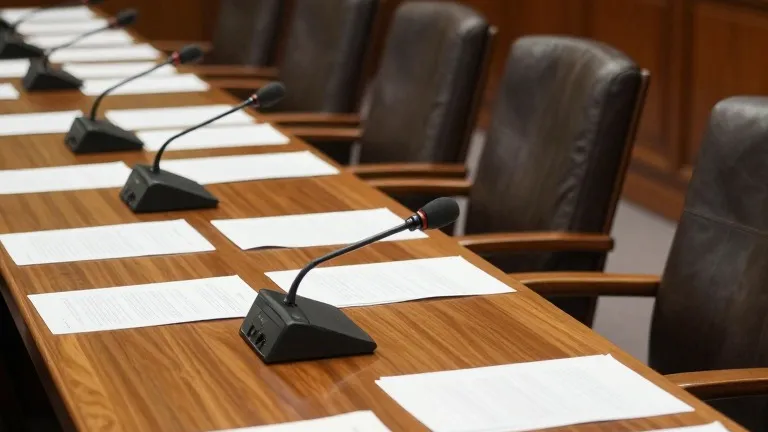
Gadi Eisenkot is pressing for a minority government structure that requires only 58 or 59 seats to form a cabinet, a move that clashes with the demands of rival leaders within the anti-Netanyahu bloc. This strategic shift has intensified internal tensions as the coalition partners attempt to finalize their pre-election agreements. The core of the dispute centers on whether the opposition can secure power without guaranteeing a permanent 61-seat majority from the outset.
The timeline of this political maneuvering began as polls indicated the anti-Netanyahu camp would likely outperform the outgoing coalition. Despite this advantage, the Zionist parties seeking change currently lack the 61 seats necessary for a stable majority under their existing pacts. Eisenkot, who seeks to lead the bloc and serve as the primary candidate for government formation, rejects any rotation arrangement with Benjamin Netanyahu. He argues that a government sworn in with a confidence vote can survive on fewer seats, provided it subsequently broadens its parliamentary support.
Legal mechanics distinguish between forming a government and removing an incumbent one. Swearing in a new cabinet requires only a majority in the confidence vote, meaning abstentions from opposition members could allow a 58-seat bloc to take office. Conversely, a constructive vote of no confidence against a sitting prime minister still requires 61 MKs to support an alternative. This distinction gives Eisenkot’s proposal legal footing, even if it does not allow the bloc to immediately depose a Netanyahu-led administration without a full majority.
Avigdor Liberman and Naftali Bennett oppose the minority model. Liberman categorically rejects governing without an immediate Zionist majority, stating that another election is preferable to a cabinet that fails his conditions. He has suggested recruiting Likud MKs to join a government without Netanyahu, though he has not identified specific legislators willing to defect. Bennett and Yair Lapid, heads of the Beyachad list, share this preference for a solid Zionist government and refuse to rely on the votes or abstentions of Arab parties.
While Eisenkot has not ruled out external support from the Ra’am party, no formula for this cooperation has been agreed upon. Yair Golan, chairman of the Democrats, has also left open the possibility of working with Ra’am. The leadership rivalry continues to complicate negotiations, with Eisenkot aiming to head the largest party and Bennett citing his experience as a former prime minister to justify his own candidacy. A meeting between Eisenkot and Liberman earlier this week resulted in a joint call to increase voter turnout but left their fundamental disagreement unresolved.
A parallel track of negotiations focuses on replacing Knesset Speaker Amir Ohana. The opposition bloc views this move as a prerequisite for any government deal, aiming to control the parliamentary agenda even if Netanyahu remains as head of a caretaker government. The speaker is elected by public vote early in the Knesset's term, and the opposition plans to assemble a majority with the help of Arab party MKs. Candidates mentioned include Chili Tropper, Matan Kahana, and Elazar Stern from Eisenkot’s list, alongside Meirav Ben-Ari and Eitan Ginzburg from the Bennett-Lapid list.
Other names in the running for the speakership are Efrat Rayten of the Democrats and attorney Oded Forer of Yisrael Beytenu. No consensus candidate has been announced yet. Liberman estimated this week that up to one-third of outgoing coalition MKs might vote against Ohana, provided the vote is conducted openly. This potential defection would help the opposition secure the necessary majority to install a new speaker.
The bloc also intends to advance several legislative priorities, including a state commission of inquiry into the events of October 7, changes to conscription laws, and limits on the prime minister’s tenure. Liberman seeks to bar individuals facing criminal charges from serving as prime minister. While party teams have begun coordinating on these issues, no binding agreement exists on the details or the sequence of implementation. Obstacles remain, as not all bloc members support every judicial change, and the memory of the previous Bennett-Lapid government collapsing before completing its agenda weighs on the current efforts.
More Politics · World news · Report a business · Got a Story?