Babis Government Advances Public Media Funding Shift in Late Night Vote
The Czech coalition moved a bill to replace the household broadcast fee with state budget funding, despite warnings that the move could erode editorial independence.
By Tunde Bailey ·
The Czech governing coalition advanced a significant restructuring of public media finances during a late night parliamentary session that concluded in the early hours of Saturday. Lawmakers voted to send the draft legislation to committees for further review, marking a decisive step in a process that has drawn sharp criticism from opposition groups and media employees. The move signals that the government is prepared to push forward with its plan despite ongoing debates about the potential impact on broadcaster autonomy.
The core of the proposal involves the elimination of the existing 205 crown household broadcasting fee, which equates to approximately $9.45. Under the new framework, funding for public broadcasters would be sourced directly from the state budget rather than from individual households. This shift represents a fundamental change in how these institutions are financed. Additionally, the bill proposes a roughly 15 percent reduction in funding for Czech Television and Czech Radio, with nominal amounts remaining static for several years thereafter.
Prime Minister Andrej Babis, a billionaire and populist leader, has framed this initiative as a fulfillment of a campaign promise made before his government took office in December of last year. His administration, which includes support from the far right SPD party, has frequently criticized both public and private media outlets for perceived bias in their coverage of government policies. Babis argues that the new model is more equitable for lower income households and will incentivize broadcasters to operate with greater efficiency.
In a social media post late on Friday, Babis directly addressed concerns regarding press freedom. He rejected the notion that the reforms constitute an attack on independent journalism. The Prime Minister stated that there is no war for independent media, no fight for democracy, and no preparation for the nationalization of media channels. He emphasized that the changes are about fairness and operational improvement rather than political control.
However, skeptics remain unconvinced by these assurances. Opposition parties have drawn parallels between the Czech proposal and media reforms implemented under Viktor Orban, the former prime minister of neighboring Hungary. This comparison has added to the political tension surrounding the bill, as critics argue that state funded media can become more susceptible to government influence when they lose independent revenue streams.
Employees of the public broadcasters have also expressed significant alarm over the proposed changes. In June, staff members staged a strike to highlight their concerns. They argued that tying their financial stability to the state budget would leave them vulnerable to political pressure, potentially compromising their ability to report objectively on government actions.
The stakes in this debate are particularly high because public media occupy a central role in Czech society. These outlets are consistently ranked among the most trusted news sources in the country. Czech Television, in particular, remains the most watched broadcaster across multiple demographic groups, indicating that a large portion of the population relies on these institutions for their daily news consumption.
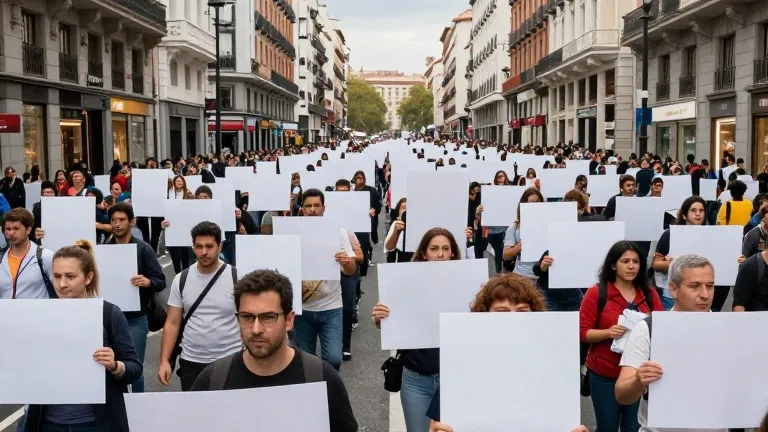
The political momentum behind the bill is expected to face further tests in the coming days. A civic organization has organized a public demonstration for Sunday, aiming to gather support for the preservation of independent funding mechanisms. Additionally, journalists and other staff members at the broadcasters have announced a planned strike for November 3, signaling their intention to continue pressing their case against the government's proposed overhaul.
More Politics · World news · Report a business · Got a Story?