US Task Force Targets Iran's Land Borders to Block Weapon Flows
CENTCOM establishes a 20-person unit to monitor overland routes, following an eight-month naval blockade that halted $25 billion in oil exports.
By Petra Murphy ·
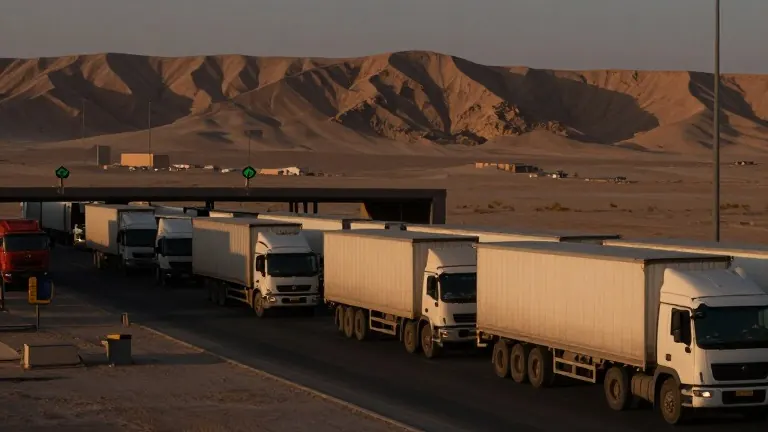
American forces are moving to close the gaps left by the maritime blockade of Iran. US Central Command announced the creation of Task Force Iron Gate, a unit designed to stop the movement of advanced weapons, dual-use technologies, and sanctioned goods across the country's land borders and the Caspian Sea. This shift targets the overland trade routes that Tehran has used to maintain its military industrial complex while its ports remain restricted.
The task force will operate from Tampa, Florida, with an internal staff of approximately 20 civilian and military personnel. Adm. Brad Cooper, the CENTCOM commander, stated that the new team will coordinate with other US government agencies to address weapons trafficking and sanctions evasion. He noted that the establishment of the unit reinforces the existing naval blockade, which has prevented Iran from exporting over $25 billion in crude oil in recent months.
The move follows an eight-month naval blockade that has already strained Iran's financial networks. CENTCOM reports that strict enforcement continues against ships entering or departing Iranian ports. However, the Islamic Republic continues to build missiles and drones using supplies from Russia and China. The new task force aims to constrain Iran's ability to finance terrorism, rebuild weapons factories, and replenish its military by cutting off these overland supply lines.
Geography presents a substantial challenge for the new operation. Iran shares its longest border with Iraq, a stretch of 1,599 kilometers. Its border with Turkmenistan measures 1,148 kilometers, while the frontier with Afghanistan is 921 kilometers long. The border with Pakistan is approximately 900 kilometers, and the frontiers with Azerbaijan, Turkey, and Armenia measure 611, 534, and 44 kilometers respectively. Monitoring these diverse routes requires tracking complex networks of roads, border crossings, and commercial transport companies.
Diplomatic dynamics along these borders are mixed. The US has pressured Iraq to cut off Iranian air routes, though numerous Iranian-backed militias operate within Iraq. Pakistan maintains complex ties with Iran and has warm relations with the current US administration. China may use Pakistan as a conduit for supplies, but Pakistan is also part of the new Mecca Defense Alliance pact alongside Saudi Arabia and Turkey. Azerbaijan and Turkey, a NATO member, have good ties with the United States.
The timing of the announcement follows the midterm elections. Critics of the Iran war have gained power in Congress and may seek to rein in the war effort. This political shift suggests the United States has limited time to execute new operations and secure results. The US Rewards for Justice program is also offering millions of dollars for information on Iran's nuclear program, adding another layer of pressure on the regime.
Cooper said the collaboration with interagency partners will further constrain Iran's economic and military capabilities. The task force focuses on preventing the use of ground routes to transport materials that bypass maritime restrictions. The operation represents an expansion of American efforts to restrict the Islamic Republic's access to new weapons and financial networks.
The next phase involves the coordination of the 20-person staff in Tampa with other US agencies. CENTCOM will continue strict enforcement against ships in Iranian ports while the new team addresses overland trade. The specific mechanisms for monitoring the 6,457 kilometers of land border have not been detailed beyond the interagency coordination role.
More Business · Customer Complaints · Report a business · Got a Story?