Falcon 9 launch cadence slows as Starlink fleet passes 11,000
SpaceX deployed 27 satellites from Vandenberg Space Force Base on Thursday, ending an 11-day gap that marks a clear shift away from the workhorse rocket.
By Petra Murphy ·
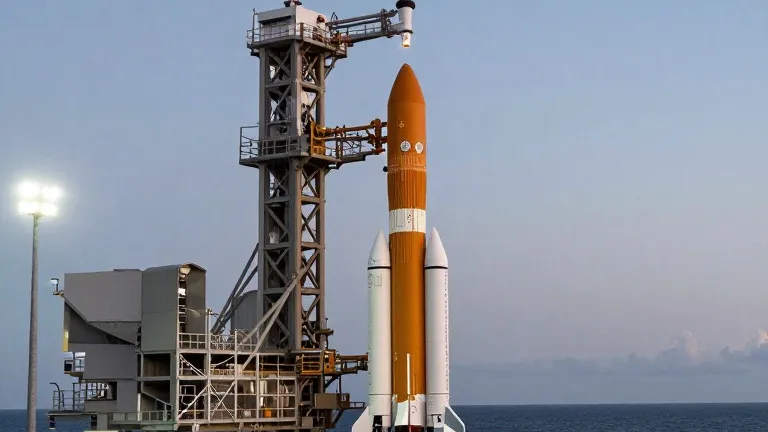
SpaceX launched 27 Starlink satellites from the California coast on Thursday, a flight that occurred against the backdrop of a slowing launch pace for the company's primary rocket. The mission, designated Starlink Group 15-15, lifted off from Pad 4E at Vandenberg Space Force Base at 6:48 p.m. EDT.
The Falcon 9 rocket, carrying booster B1063, reached the end of its first stage burn approximately 2.5 minutes into flight. The booster separated from the upper stage and subsequently landed on the droneship Of Course I Still Love You roughly eight minutes after liftoff. This marked the 36th time B1063 had flown and landed, a vehicle that previously carried NASA's DART asteroid impact mission in 2021.
The upper stage performed a second burn about 45 minutes after liftoff to insert the satellites into low Earth orbit. Deployment of the spacecraft began 62 minutes after the rocket left the pad. This launch adds to a constellation that now includes more than 11,000 active spacecraft.
The frequency of these missions has declined as SpaceX transitions its focus to the larger Starship rocket. Starship is designed to carry the newer, larger Version 3 Starlink satellites that no longer fit in the Falcon 9 fairing. Once Starship becomes operational, SpaceX intends to phase out the Falcon 9 and its heavier Falcon Heavy variant.
The shift in schedule is evident in recent history. The 100th Falcon 9 launch of 2026, a Starlink mission from Cape Canaveral, was identified as the final flight of that type from Florida's Space Coast. At their peak, Starlink launches occurred every two to three days. However, the flight before Thursday's mission took place 11 days earlier, and that specific launch was the first in over three weeks.
Thursday's mission was the 116th Falcon 9 flight of 2026, with approximately three-quarters of this year's launches dedicated to the Starlink program. The current pace suggests the rocket will complete just under 150 missions by the end of the year. This figure falls short of the 165 launches recorded in 2025, which remains the busiest year for the vehicle.