17-year-old finds 3,300-year-old Egyptian amulet on Israel school trip
A student on his second day in the country stumbled upon a rare scarab seal while hiking at Tel Gezer National Park.
By Petra Murphy ·
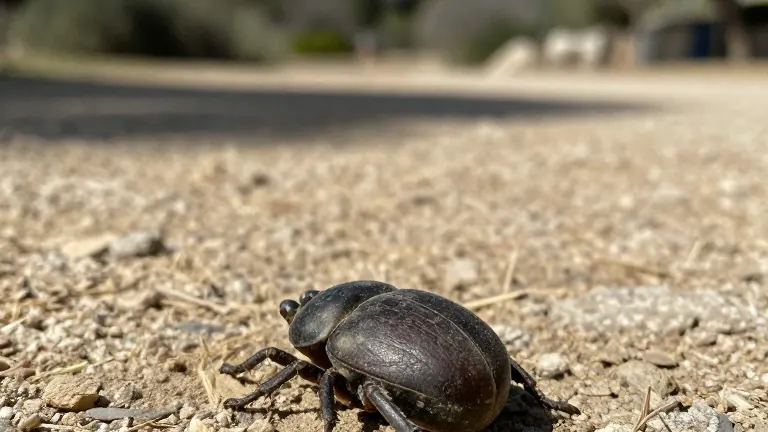
A 17-year-old American student found a 3,300-year-old Egyptian amulet while on a school trip to Israel. The artifact is a scarab seal that dates to the Late Bronze Age. It was discovered in the Judean lowlands at Tel Gezer National Park.
Shiloh Attoun arrived in Israel just two days before the find. He was participating in the Jewish National Fund-USA’s Muss High School study-abroad program. This was his first visit to the country. He was hiking up a mountain toward an altar with Benji Hain, the program's dean of students. Attoun was throwing rocks out of boredom when one struck another. The impact revealed a shiny, spherical object on the ground.
Attoun picked up the item and flipped it over. He saw two faces resembling the Hebrew letter Nun. He showed the object to Hain. Hain recognized the potential value of the find. The pair immediately contacted the Israel Antiquities Authority to report the discovery.
Archaeologist Adam William Asper from the Israel Antiquities Authority visited the school to collect the item. The artifact was added to the National Treasures of Israel. Attoun received a certificate of appreciation for his careful handling. Hain and the program instructors were also praised for their quick actions.
Prof. Ido Koch of Tel Aviv University examined the object. He dated it to the Late Bronze Age. The scarab is decorated with two cobra motifs. These symbols, known as the uraeus, were protective and royal signs in ancient Egypt and the southern Levant. The seal also features a semi-ellipse representing the Egyptian hieroglyphic sign for lord.
Koch noted that a similar scarab with three snakes was found during excavations at Tel Megiddo. These artifacts reflect the cultural influence of ancient Egypt in the region. Egypt ruled over Canaan for a period that began approximately 3,500 years ago. The scarab beetle was sacred to the Egyptians. It symbolized new life because the insect was seen as an incarnation of the god who creates life.
Tel Gezer was a major Canaanite city during the Late Bronze Age. It controlled a strategic crossroads in the Shephelah region. The site is now a national park managed by the Israel Nature and Parks Authority. It remains a key location for understanding the region's history.
Amit Melman, the Israel Antiquities Authority’s Central Region educational director, commented on the discovery. He said the story illustrates the connection between young students and the country's history. The authority emphasized that objects found in the field should generally be left in place and reported immediately. This practice allows archaeologists to document the original context of the find. Attoun’s reporting helped preserve the artifact for future study.