Willow bark birthed the aspirin industry
A compound extracted from tree bark in the 1820s was chemically modified by Bayer in the late 19th century to create the world's most widely used painkiller.
By Petra Murphy ·
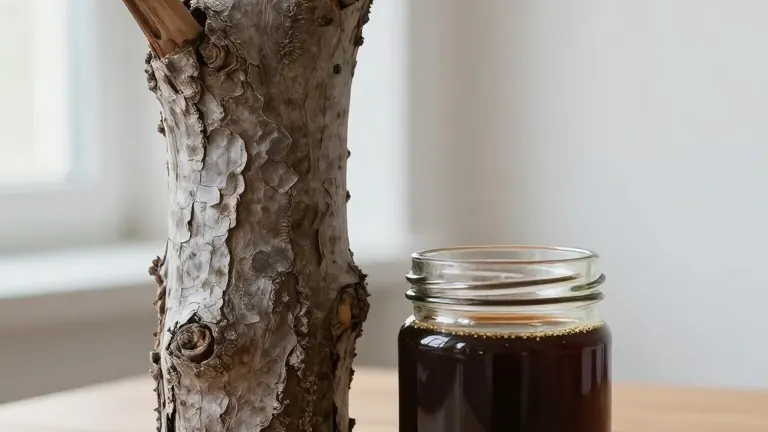
The modern pharmaceutical industry relies on a single active ingredient derived from the bark of the willow tree.
The active compound, salicin, was first isolated in 1826 by Italian researchers Brugnatelli and Fontana. German pharmacologist Johann Andreas Buchner later extracted the same substance in 1828 and named it salicin after the Latin word for willow.
Salicin functions as a glycoside, a molecule composed of a sugar attached to a functional group. Once ingested, the body breaks the compound down into salicylic acid. This transformation allows the substance to act as an anti-inflammatory and pain reliever.
In the late 1800s, chemist Felix Hoffman worked at the German pharmaceutical company Bayer. He modified salicylic acid to reduce its harshness on the stomach. This chemical adjustment produced acetylsalicylic acid, which the company marketed as aspirin.
Aspirin expanded beyond basic pain relief to include fever reduction and blood thinning properties. It inhibits prostaglandin pathways and blocks the enzyme cyclooxygenase. These mechanisms make it a standard treatment for preventing heart attacks and strokes.
Current estimates indicate that 40,000 tonnes of aspirin are used annually worldwide. This volume reflects the compound's status as a cornerstone drug in global healthcare systems.
The commercial success of aspirin follows a long history of traditional use. Ancient Sumerian records from 3000 BCE document the medicinal properties of willow. Indigenous Cheyenne communities in North America brewed willow bark into teas to treat pain and fever.
In 1758, English cleric Reverend Edward Stone reported to the Royal Society of London that willow bark relieved his fever. He noted its bitterness and compared it to the Cinchona tree, which was already used for quinine. His findings renewed scientific interest in the plant.
European settlers introduced willow trees to Australia in the 1860s. They planted the species to stabilize riverbanks with dense root systems. In the new environment, the trees became invasive, altering water quality and outcompeting native vegetation.
The willow tree contains approximately 400 species in the genus Salix. Most species are native to the Northern Hemisphere. They thrive in cold and temperate regions near water sources, anchoring roots in silty banks.
The white willow, Salix alba, is the primary species used for medicinal extraction. It grows along waterways in Europe and western Asia. The tree features long, slender leaves with a pale green top and silvery underside.
Hippocrates, known as the father of medicine, is often credited with prescribing willow to women in labor. Historical accounts suggest he recommended the plant for pain relief during childbirth. The clinical effectiveness of bark chewing for such intense pain remains debated, but the endorsement secured the plant's place in classical pharmacopoeia.
More Business · Customer Complaints · Report a business · Got a Story?