Serbia's New Government Faces Dec. 11 Deadline on Russian Oil Sanctions
Incoming Student List leaders must secure a prime minister and extend a US waiver for NIS Group before the current exemption lapses in less than a month.
By Petra Murphy ·
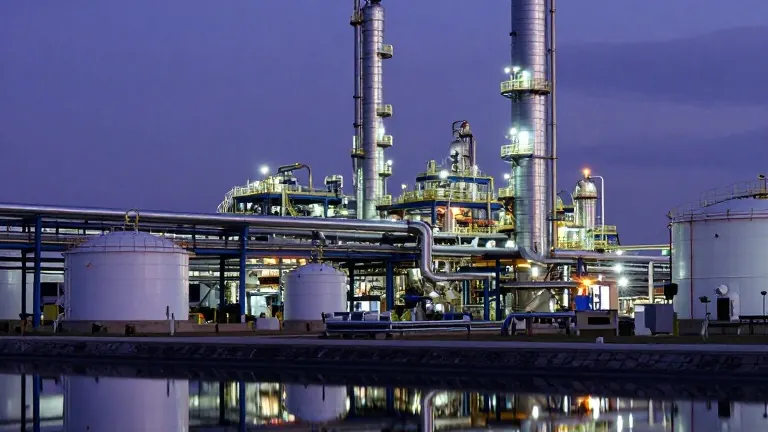
Serbia's incoming government inherits immediate economic deadlines tied to its energy and infrastructure partnerships with Russia and China. The Student List movement won a parliamentary majority in last month's election but has not yet named a prime minister candidate. The first major hurdle is the expiration of a US sanctions waiver on December 11. This waiver currently allows NIS Group, Serbia's sole oil refinery, to operate despite its majority ownership by Russian energy giant Gazprom.
Washington imposed these sanctions in response to Russia's 2022 invasion of Ukraine. Production at the refinery suspended last year until temporary exemptions were granted. These waivers were intended to bridge the gap while Gazprom negotiates the sale of its stake to Hungarian company MOL. Without an extension, the refinery faces a halt in operations at the start of the new administration's term.
Vuk Vuksanovic, a foreign policy lecturer at King's College London, described the situation as a dark cloud for the new leadership. He noted that Russian officials remain reluctant to relinquish ownership of the refinery. If the waiver is not renewed, the economic shock will be immediate and severe for the country's energy sector.
Nikola Xaviereff, a research fellow at the German Council on Foreign Relations, expects fewer future extensions. He argues that the recent US midterm elections will increase pressure from Washington to finalize the deal quickly. Hungarian Foreign Minister Anita Orban stated on November 5 that a final agreement could be reached by the December deadline.
Serbia's dependence on Russian gas remains high, covering approximately 90 percent of domestic needs. Supply is secured through three-month contracts, with the current agreement expiring at the end of the year. Former President Aleksandar Vucic stated on social media that the latest deal costs 318 euros per 1,000 cubic liters. This price is significantly lower than the market rate of roughly 900 euros, a disparity that complicates efforts to diversify energy sources.
The relationship with China also presents challenges. Chinese firms built the Novi Sad railway station, where a roof collapse led to nationwide protests that fueled the Student List's rise. The incoming party plans to maintain economic ties but demands greater transparency in contracts and tendering processes. Ilija Srdanovic, the Student List's lead candidate, said the new government lacks insight into previous agreements and whose interests they served.
Chinese companies are involved in major infrastructure projects, including the Belgrade subway and the Expo 2027 complex. The exhibition is scheduled to open in May. Vuksanovic questioned whether the project will be completed on time, noting that it was previously viewed as a symbol of the previous administration's opacity. Analysts expect Chinese firms to adapt to stricter scrutiny while maintaining their economic presence.
Bartosz Kowalski, an associate professor of Asian studies at Lodz University, said the shift in political power will test the standalone value of Chinese investments. He noted that China is Serbia's second-largest investor, with nearly $8 billion invested since 2010. Vucic's recent visit to China yielded promises of $1 billion in new investments, a figure that incoming officials must manage carefully.
The European Union remains Serbia's largest trading partner. The Student List is committed to EU integration, but accession talks have been stalled for years. A European Commission report from November 4 stated that 167.6 million euros had been released to Serbia under the Growth Plan for the Western Balkans. Further payments were frozen earlier this year due to judicial reforms that Brussels viewed as democratic backsliding.
Xaviereff suggested that accessing funds from the EU's Growth Plan, which offers 6 billion euros to Balkan candidate states through 2027, is a realistic near-term goal. The window to claim these payments closes at the end of next year. The Student List, like the previous government, has stated it will not recognize Kosovo as independent, a key requirement for Brussels. Xaviereff predicted the EU relationship would be a gradual process rather than an immediate reset.