Musk Trims Lunar Fuel Flights to Six or Eight
The SpaceX CEO rejects the 22-launch figure cited by the Aerospace Safety Advisory Panel for the 2028 lunar mission, arguing that current Starship capabilities require far fewer flights.
By Petra Murphy ·
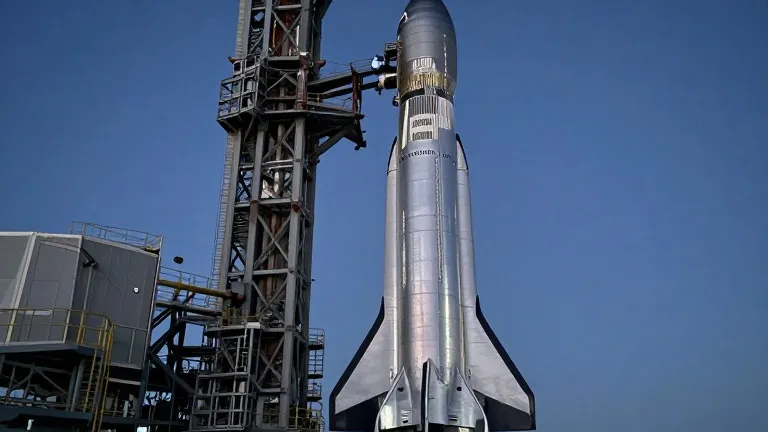
Elon Musk stated that six to eight Starship launches will be sufficient to refuel the lunar lander for the 2028 Artemis IV mission. This figure stands in contrast to the 22-launch estimate provided by the Aerospace Safety Advisory Panel during its quarterly public meeting on Thursday.
Charlie Precourt, a former NASA astronaut and member of the advisory panel, identified the fueling process as a primary risk for the crewed Moon landing. Precourt noted that the most recent internal estimate required approximately 22 flights to fill the orbital depot. His comments were shared on social media by Ars Technica reporter Eric Berger, which prompted Musk to respond directly.
Musk characterized the panel's number as excessive in his reply, asserting that the actual requirement would be closer to six or eight launches. The discrepancy arises from the physical limitations of the Starship vehicle. The rocket consumes nearly its entire propellant load to reach Earth orbit, necessitating a separate orbital depot for refueling before the lunar lander can depart.
SpaceX intends to use an upgraded V3 Starship configuration for these refueling operations. The number of tanker flights required depends on the amount of propellant each vehicle can deliver and the losses incurred during transfer. Cryogenic fuel and oxygen boil off slowly in orbit, creating a variable loss factor that affects the total launch count. NASA's estimate appears to rely on current lifting capabilities, while Musk's projection assumes a more efficient future version of the vehicle.
Time and cost are critical factors in the logistics of the mission. Berger calculated that filling a depot at the panel's 22-launch rate would take about three months, assuming SpaceX achieves a launch cadence of two Starships per week by the end of 2027. Each additional tanker flight represents a separate launch event, increasing the window for potential technical issues before the crewed vehicle launches.
Musk has previously disputed higher launch counts. In 2021, he described a government estimate of 16 launches as extremely unlikely, predicting a maximum of eight tankers would be needed. Precourt acknowledged that Artemis IV involves a large number of firsts. He also commended NASA Administrator Jared Isaacman for working to remove obstacles for both SpaceX and Blue Origin, the latter of which uses a lander that does not require orbital refueling for its first mission.
The resolution of this estimate will depend on the performance of hardware SpaceX has not yet fully flown in a refueling capacity. The company plans to execute these transfers with the V3 Starship, a system that remains in development. Until the vehicle demonstrates its specific payload and transfer efficiency in orbit, the final number of required launches will remain an estimate based on projected rather than realized capabilities.