Kyiv deaths hit 140 in eight months
The toll is nearing the full-year total from 2025 as a lack of safe spaces pushes 4 million residents into subway stations.
By Alina Carter ·
Fourteen hundred people have died in Kyiv since the start of the year. The city’s military administration reported that 140 residents were killed in the first eight months of 2026. That figure is close to the 172 deaths recorded for all of 2025. If the current pace continues, this year will be the deadliest for the capital since the full-scale invasion began in 2022.
The death toll has risen as Russian attacks on the city have intensified. Daily life in Kyiv was relatively calm compared to front-line areas until recently. Now the capital increasingly functions like a combat zone. The pressure on local infrastructure has forced a major shift in how residents manage their daily routines and safety.
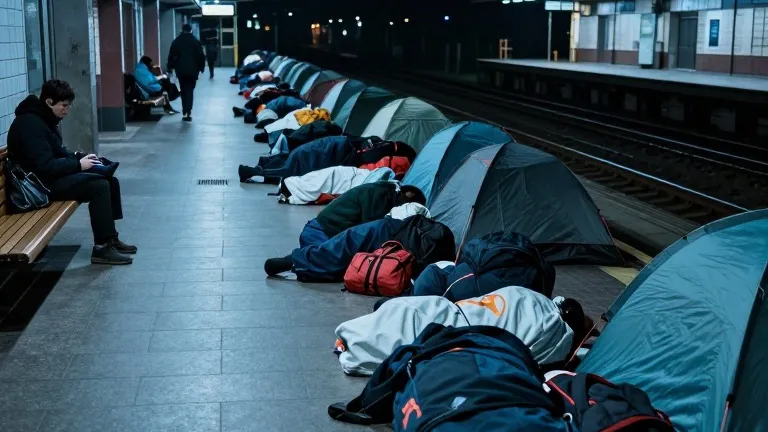
A critical shortage of shelters has driven 4 million residents underground. Subway stations have been converted into temporary homes. From around 10 p.m. each night, people lay out mattresses and set up small tents on the platforms. Children sleep beside adults, and pets rest along the cold walls near their owners or strangers.
Valentyna Chorna, a principal at a school in southwestern Kyiv, keeps her classes running in person. Her school’s shelter holds more than 500 students. This allows pupils in grades one through nine to attend even when alarms sound. However, attendance depends on how long the sirens last. If an alert begins in the morning, students may miss their classes.
The strikes have also caused supply gaps in local markets. Attacks on warehouses have led to supermarket shortages not seen since the early months of the war. Emergency power outages returned in late September. A recent Russian attack also paralyzed the subway system. Officials are uncertain how the city will maintain heat, electricity, and water supplies through the coming winter.
Local surveys indicate residents are preparing for a long conflict. The Kyiv International Institute of Sociology reported that 72% of city residents said in September they were ready to endure the war as long as necessary. Authorities have adjusted rules to support this resilience. The curfew now runs from 1 a.m. to 5 a.m. Some facilities may operate during yellow alerts, while red alerts require immediate sheltering.
Individual tragedies have marked the escalation. In September, a drone hit an apartment building in the central Pechersk district, killing 14-year-old Daniel Umanskyj. A neighbor, Vlad, was in the hallway with his daughter at the time. He said being late that day saved their lives. Flowers now stand outside the damaged building in his memory.
Resident Halyna takes her 5-year-old son, Roman, to the nearest station most evenings. She lives in the Lukyanivka district, an area Russia has targeted repeatedly during the four years and eight months of the war. She told Deutsche Welle that the family has been lucky to survive another night.
More Business · World news · Customer Complaints · Report a business · Got a Story?