iPhone Duo users report 15% screen loss to fixed sidebar
Early reviews suggest the dock consumes a large portion of the 5.4-inch outer display, a design choice that contrasts with the more flexible layout of the Galaxy Z Fold 8.
By Alina Carter ·
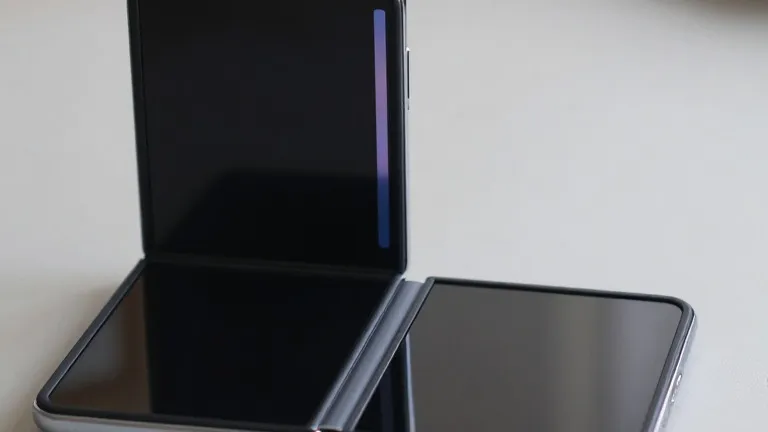
Early users of the iPhone Duo are reporting that the device’s fixed sidebar consumes 15 percent of the usable area on its 5.4-inch cover screen. This structural choice effectively locks away a significant portion of the display, leaving the right side of the panel largely unused for standard app content. The issue has drawn attention from reviewers who compare the interface directly to Samsung’s competing hardware.
The iPhone Duo launched with limited availability, marking Apple’s first entry into the wide foldable category. The device arrived in the market after years of Android optimizing for large, foldable screens. While the hardware specifications appear competitive, the software implementation has faced immediate scrutiny. Critics note that Apple’s initial attempt at this form factor does not yet match the refinement seen in the established Galaxy Z Fold line.
Allison Johnson of The Verge noted that the iPhone Duo feels more difficult to operate with a single hand than the Galaxy Z Fold 8. The Fold 8’s taller and narrower physical profile makes its cover screen easier to navigate. This ergonomic difference is a key point of contention for consumers who previously chose Samsung devices specifically for the utility of their outer displays.
The core complaint regarding the iPhone Duo centers on its dock implementation. The sidebar sits permanently on the right side of the screen. While intended to simplify navigation, the design restricts the space available for media and applications. This contrasts with the Galaxy Z Fold 8, which allows users to select between gesture controls and a navigation bar. When set to gestures, the Fold 8 utilizes nearly all of its screen real estate for main content.
Apple’s strategy appears to prioritize a uniform, slab-like aspect ratio for media by shrinking the available display space. This approach forces content to appear taller but reduces horizontal width. Samsung’s approach, as seen in the Fold 8, leaves the space free for primary content, which reviewers describe as working well for general use. The difference in wasted screen space is stark when the two devices are placed side by side.
The iPhone Duo is currently on sale, though stock remains limited. Meanwhile, the Galaxy Z Fold 8 continues to serve as the benchmark for foldable utility. The debate over whether a fixed sidebar is a useful tool or a space penalty will likely shape early adoption rates for Apple’s new foldable as more users transition from Android or traditional slab phones.