Ethiopia Accelerates Russian Fighter Jet Delivery, Sets Eyes on S-400 Batteries
Prime Minister Abiy Ahmed confirmed the arrival of 12 Su-35s during a Moscow visit, signaling a major expansion of military hardware purchases amid renewed internal conflict.
By Tunde Bailey ·
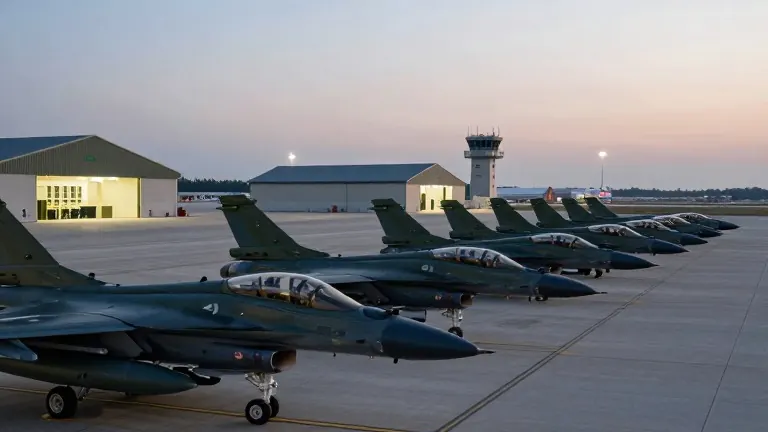
Ethiopian Prime Minister Abiy Ahmed confirmed the arrival of 12 Russian Su-35 fighter jets on Wednesday, declaring that the delivery occurred one year ahead of the original contract schedule. The announcement coincided with his participation in the Russia-Africa Summit in Moscow, a two-day event designed to strengthen economic and security ties between the continent and Russia. Ahmed used the platform to thank Russian President Vladimir Putin for expediting the transfer of the aircraft.
Alongside the fighter jet delivery, Ahmed stated that Ethiopia intends to purchase four S-400 air defense batteries. These systems are engineered to intercept and destroy enemy aircraft and missiles. The prime minister did not specify a timeline for the arrival of the S-400 units but emphasized that the new equipment would bolster the nation's capacity for preemptive deterrence against potential aggressors. In a follow-up social media post, he described the newly deployed jets as the primary line of defense for Ethiopian airspace.
This acquisition marks a concrete step in a deepening military partnership between Addis Ababa and Moscow. The two nations signed a military cooperation agreement in July 2021, which aims to enhance training and technology transfer for the Ethiopian armed forces. The relationship has seen visible progress recently, with Janes reporting in January that Ethiopia displayed Russian Yak-130 advanced jet trainers during ceremonies marking the 90th anniversary of its air force.
Russia has become an increasingly important supplier of military hardware to the African continent. The Stockholm International Peace Research Institute reports that Moscow provided 15 percent of major weapons imports to Africa between 2021 and 2025, securing the position of the third-largest supplier. This growth in arms sales aligns with Moscow's strategy to forge stronger ties with African nations while Western sanctions restrict its traditional markets due to the war in Ukraine.
The timing of the weapons delivery intersects with escalating military operations in northern Ethiopia. Government troops entered Mekelle, the capital of the Tigray region, on October 4 after forces from the Tigray People's Liberation Front (TPLF) withdrew from the city. Since then, federal forces have expanded their territorial control in the region. Although Addis Ababa has installed a six-month caretaker administration for Tigray, combat has persisted. A TPLF commander called for continued resistance in a recent broadcast, and the group claimed attacks on government-aligned troops in northwestern Tigray on Wednesday.
The current hostilities have effectively stalled the peace agreement signed in Pretoria, South Africa, in November 2022. That accord ended a two-year conflict that researchers at Belgium's Ghent University estimate killed approximately 500,000 civilians. Federal forces are simultaneously engaged in conflicts with Fano, an Amhara armed group that has fought against the central government since 2023.
More Business · World news · Customer Complaints · Report a business · Got a Story?