Clancy Murder Trial Returns to Court After Hung Jury
Judge William Sullivan reviews motions on Monday following a September mistrial, with the defense seeking dismissal and the prosecution weighing a second trial.
By Petra Murphy ·
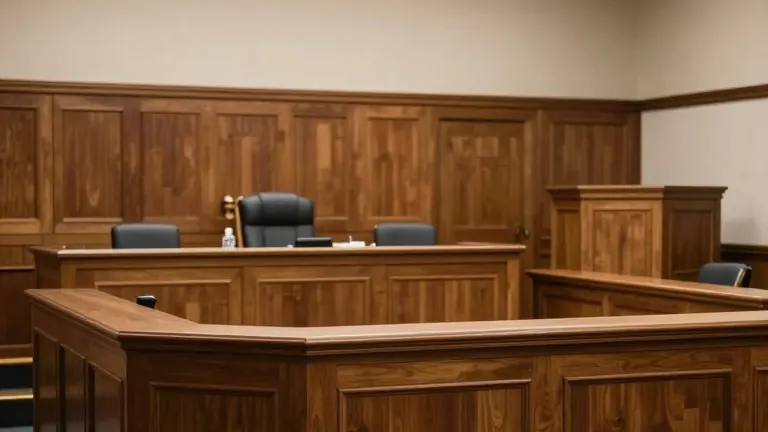
The murder case involving Lindsay Clancy has returned to the Plymouth County Superior Court for a review of pending motions. The return to the bench follows a mistrial declared on September 4, 2026, when the jury failed to reach a unanimous verdict on Clancy's mental state at the time of the killings.
The case began on January 24, 2023, when emergency services responded to a 911 call at the Clancy family home in Duxbury, Massachusetts. Responders found the family’s five-year-old daughter, Cora, and three-year-old son, Dawson, dead in the basement from strangulation. Their eight-month-old son, Callan, was rescued alive but died three days later. Authorities located Clancy in the backyard after an apparent suicide attempt.
The initial trial lasted nearly six weeks and included testimony from more than 80 witnesses. The jury’s sole task was to determine whether Clancy was legally responsible for her actions or should be acquitted by reason of insanity. In September, the deliberations stalled because one juror refused to join the majority. Several jurors stated that this member disengaged from group discussions and checked his phone during the process.
Defense attorney Reddington argued on Monday that the prosecution’s evidence was insufficient and that continuing the case violated protections against double jeopardy. The defense requested that the charges be dismissed. Reddington also questioned the credibility of the dissenting juror, whom he referred to as Juror Doe. He noted that the juror had appeared in national media and claimed the man had more screen time than the attorney himself.
The prosecution, represented by the Plymouth County District Attorney’s office, has not yet confirmed whether it will proceed with a second trial. The state maintains its commitment to seeking justice for the three children. A lawyer representing the dissenting juror argued that the juror did not request to serve and that the defense accepted him during selection. That lawyer stated the defense’s objection was based on information gathered after the mistrial.
Judge William Sullivan moderated the proceedings and noted that the juror questionnaire is confidential by law. He ruled that he would decide which issues could be debated in open court versus in private sessions. Sullivan paused the hearing to allow the parties to review their arguments. He specifically noted that no decision on the motion to dismiss would be made during that session.
The court will continue to address the prosecution’s motion to restrict out-of-court comments. Sullivan indicated he would analyze the defense’s dismissal claim, referencing a bobblehead figure of John Adams on his desk. He said he would keep the lessons from the second president’s writings in mind while reviewing the legal arguments.